
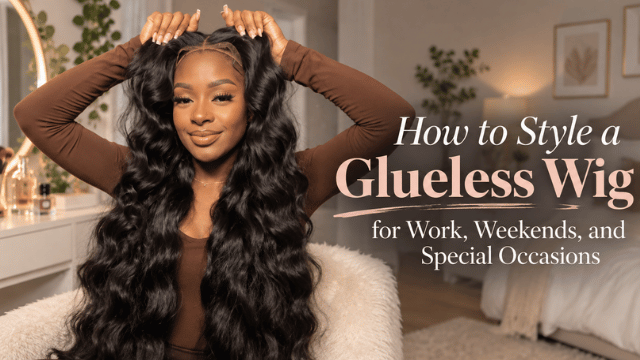
A good wig should fit into your life, not force you to plan your entire day around your hair.
On Monday morning, you might want a polished hairstyle that takes only a few minutes. By Saturday, you’re in the mood for something relaxed and playful. And when a wedding, birthday dinner, or special event comes around, you want a look that feels a little more glamorous.
The good news? You don’t necessarily need three different wigs to achieve those looks.
With the right styling techniques, one glueless wig can take you from a professional office setting to a casual weekend outing and an evening celebration.
The key is knowing how to change the hairstyle without compromising comfort, security, or the natural appearance of the hairline.
Why Glueless Wigs Work for Different Occasions
Traditional wig installations often involve adhesive, lace preparation, and additional time to secure the hairline.
Glueless wigs take a different approach.
Depending on their construction, they may use adjustable straps, combs, elastic bands, or other built-in features to help keep the wig in place without glue.
This makes them especially appealing to people who prefer a simpler daily routine.
Another advantage is flexibility.
You can wear a sleek style for work, remove the wig at the end of the day, and restyle it for a completely different occasion.
However, not every glueless wig offers the same styling freedom. The cap construction, lace area, hair length, texture, and fit all influence which hairstyles are practical.
Before experimenting with different looks, make sure the wig fits securely and comfortably.
How to Style a Glueless Wig for Work
Professional hairstyles usually work best when they look intentional without appearing overly complicated.
You want something that stays neat throughout meetings, commuting, and everyday activities.
1. The Sleek Middle Part
A middle part is one of the simplest ways to create a polished appearance.
Start by placing the wig securely on your head and adjusting the parting line if the construction allows it.
Use a wide-tooth comb or appropriate brush to smooth the hair into position.
For human hair wigs, a small amount of lightweight serum can help control flyaways without making the hair appear greasy.
If you’re using heat to flatten the part, make sure the hair and cap materials are compatible with the tool, and avoid applying excessive heat directly to the lace.
The result is clean, understated, and suitable for most office environments.
2. The Soft Side Part
Not everyone prefers the symmetry of a middle part.
A side part can create a softer appearance while adding movement around the face.
This works particularly well with body wave, loose wave, and straight textures.
Rather than making the part extremely deep, experiment with a slightly off-center position.
Let a few face-framing sections fall naturally.
The goal is a hairstyle that looks effortless but still feels appropriate for a professional setting.
3. The Low Ponytail
A low ponytail is practical for busy workdays, particularly when you want hair away from your face.
However, check the wig’s construction before attempting this style.
Some glueless wigs are designed primarily for wearing the hair down, and pulling them tightly backward can expose the cap or create unnecessary tension.
If your wig supports a low ponytail, gather the hair loosely at the nape and secure it without pulling excessively on the front.
A soft, low ponytail often looks more natural than an extremely tight one.
Weekend Hairstyles: Relaxed, Playful, and Easy
Weekends are an opportunity to experiment.
You may want more volume, a different part, or a hairstyle that feels less structured than your weekday look.
The beauty of glueless wigs is that they can make switching between styles more convenient, especially when you prefer not to repeat an adhesive installation each time.
1. Loose, Everyday Waves
Loose waves are ideal for brunch, shopping, casual dates, and afternoon outings.
If you’re wearing a human hair wig suitable for heat styling, use a curling wand on an appropriate temperature setting with heat protectant.
Work in larger sections for softer waves.
After the curls cool, gently separate them with your fingers rather than brushing them aggressively.
This creates movement without making the hairstyle look overly styled.
For naturally wavy wigs, you may only need a light refresh with water and a suitable leave-in product.
2. The Half-Up, Half-Down Look
A half-up hairstyle offers a nice balance between casual and put-together.
Take two small sections from the front and bring them toward the back of the head.
Secure them loosely with a clip or hair tie.
Leave the remaining hair down.
This style works particularly well with curly or wavy textures because the loose sections maintain volume.
Just remember that pulling the upper section too tightly may shift the wig or place stress on the attachment points.
3. A Casual Headband Style
Some days, you don’t want to spend time styling at all.
That’s where a headband can help.
A simple fabric headband can hold hair away from your face and create a relaxed look for errands, coffee runs, or casual outdoor activities.
It can also help disguise minor styling imperfections when you’re between washes.
Choose a headband that sits comfortably without pressing too tightly against the wig or scalp.
Special Occasion Hairstyles That Feel More Glamorous
Weddings, parties, formal dinners, and celebrations often call for something more distinctive.
You may want extra volume, defined curls, or a more elegant silhouette.
The trick is choosing a style that works with your wig’s construction.
1. Hollywood-Inspired Waves
Soft, glamorous waves are a classic choice for formal occasions.
They’re particularly attractive on longer human hair wigs.
Create curls in a consistent direction, allow them to cool, and then gently brush them into larger waves.
A lightweight finishing spray can help maintain the shape.
For a more polished look, tuck one side behind the ear if the wig’s hairline and side construction allow it.
This style pairs beautifully with evening dresses and statement earrings without requiring a complicated updo.
2. Voluminous Curls
For someone who prefers a bolder appearance, defined curls can add drama without requiring elaborate styling.
Start with a curly wig or create curls using methods appropriate for the hair material.
Concentrate on shape rather than simply adding more volume.
A little fullness around the sides can frame the face, while carefully separating curls creates movement.
Avoid loading the hair with heavy styling products, which may weigh down the curls and reduce their definition.
3. An Elegant Low Bun
A low bun can be an excellent formal hairstyle, provided your wig is suitable for wearing up.
Gather the hair at the nape without pulling the front hairline tightly.
Twist the length into a loose bun and secure it carefully.
Leave a few face-framing strands if you want a softer finish.
Before leaving, use a mirror or phone camera to check the back and sides for exposed cap material.
If the wig isn’t designed for updos, a low, loose style may be more practical than a tightly secured bun.
Choosing a Wig That Supports Multiple Hairstyles
If you want one wig to handle different occasions, versatility should be part of your buying decision.
Start with the lace area.
A wig with more usable parting space may provide greater flexibility when switching between middle and side parts.
Hair texture matters too.
Straight and body wave textures can be convenient for creating polished styles, while curly textures offer natural-looking volume with less need for heat styling.
Length also changes your options.
Medium-length wigs can be easier to manage during everyday activities, while longer wigs may offer more possibilities for waves, ponytails, and formal styles.
A versatile wig is one that works with your routine, not just your favorite inspiration photo.
How to Keep Your Glueless Wig Secure Throughout the Day
Changing hairstyles is fun, but security comes first.
A beautiful hairstyle won’t feel comfortable if you’re constantly worried about the wig shifting.
Before leaving home, check that the cap fits properly and any adjustable features are set comfortably.
Avoid making the wig excessively tight. A secure fit shouldn’t require painful pressure.
If your wig uses an elastic band, make sure it lies flat and doesn’t create discomfort.
Be cautious with hairstyles that pull strongly against the hairline, especially high ponytails or tightly swept-back looks.
For a long event, it’s also worth testing your hairstyle at home beforehand.
Move your head naturally, bend forward, and check whether the wig stays in position.
That quick test can help identify problems before they become inconvenient.
Common Styling Mistakes to Avoid
Even a high-quality wig can become difficult to manage when it’s styled incorrectly.
One common mistake is using too much product.
Heavy oils, gels, and sprays can cause buildup and make the hair look less natural.
Another is applying excessive heat.
Human hair wigs may tolerate heat styling, but repeated high temperatures can still cause dryness and damage. Synthetic wigs should only be heat-styled when their manufacturer specifically confirms they are heat-safe.
It’s also important not to force a hairstyle that the cap wasn’t designed to support.
A wig with limited lace coverage may look beautiful when worn down but reveal construction details in a high ponytail.
Finally, don’t ignore the fit.
Styling should never compensate for a wig that’s too large or too small.
How to Refresh Your Wig Between Occasions
You don’t need to wash your wig every time you change hairstyles.
In fact, excessive washing can contribute to unnecessary wear.
Instead, focus on refreshing the hair according to its condition.
For straight or wavy human hair, gently detangle the strands and use a small amount of suitable leave-in conditioner if needed.
Curly wigs may benefit from a light mist of water and careful finger styling to restore definition.
Let the hair dry appropriately before storing or wearing it, and avoid sleeping in the wig unless it’s specifically designed for that use and you’ve considered the associated friction and tangling.
When you’re not wearing it, store the wig in a way that helps maintain its shape and prevents unnecessary tangles.
A little maintenance between occasions can make the next styling session much easier.
One Wig, Three Different Looks
You don’t need an entirely new hairstyle every time your schedule changes.
A simple middle part can create a professional look for Monday morning. Loose waves or a half-up style can make the same wig feel more relaxed on Saturday. And with the right construction, defined curls or a low bun can transform it for a special evening.
What matters most is understanding your wig’s capabilities.
Choose a comfortable, secure fit. Work with the natural texture. Avoid unnecessary tension and excessive heat. And select hairstyles that suit both the occasion and the wig’s construction.
The best glueless wig isn’t necessarily the one that can create the most dramatic look.
It’s the one you can style confidently for the moments that make up your everyday life.


