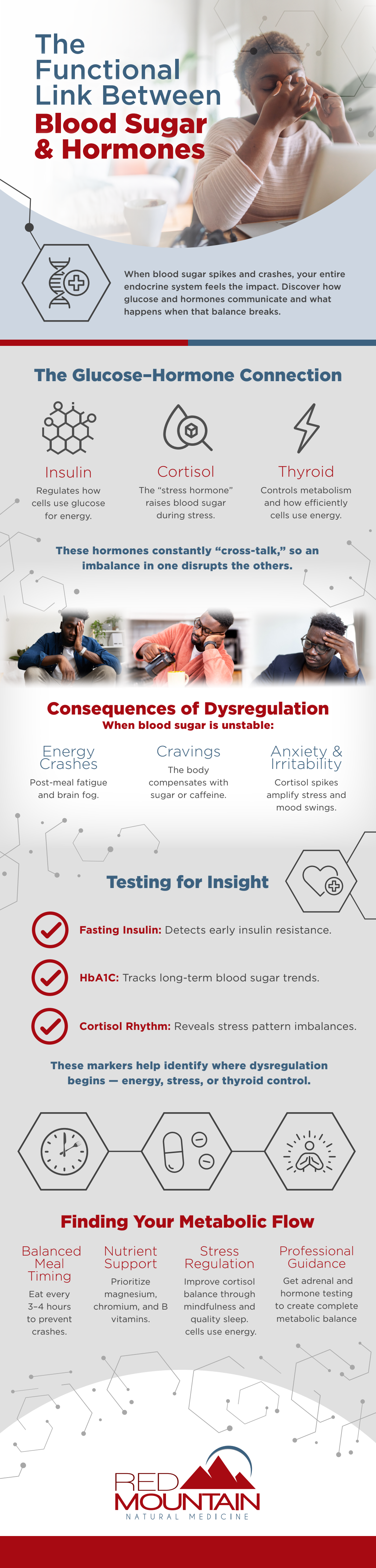
Blood sugar and hormones are closely connected, and their relationship plays a major role in how families feel throughout the day. When either one shifts, the other often reacts, affecting energy, mood, appetite, and stress responses. Learning how these systems interact helps parents manage routines more smoothly and understand why certain days feel harder than others.
Blood Sugar as the Body’s Fuel Signal
Blood sugar gives cells the fuel they need to function. When levels rise after eating, the pancreas releases insulin to move glucose into cells. When levels fall, the body signals hunger or fatigue. This fuel cycle affects how alert or sluggish someone feels throughout the day. Sudden spikes or drops can leave a person irritable, shaky, or craving quick snacks.
Stable blood sugar helps prevent these swings by providing a consistent flow of energy. Meals that include protein, fiber, and healthy fats slow absorption, reducing the dramatic shifts that can disrupt mood and focus.
Hormones That React to Blood Sugar Shifts
Several hormones respond directly to blood sugar levels. Insulin is one, but cortisol and adrenaline also play major roles. When blood sugar dips too low, the body releases stress hormones to raise it quickly. This can cause jitters, anxiety, or a sudden burst of hunger that feels urgent. Over time, frequent swings place extra stress on the endocrine system.
Hormones involved in appetite, such as leptin and ghrelin, also shift in reaction to blood sugar patterns. Irregular eating or skipped meals can confuse these signals, making cravings stronger or reducing the ability to feel full.
Why the Balance Matters for Families
Parents often notice how irregular meals, high sugar snacks, or rushed mornings affect kids’ moods. The link between hormones and blood sugar explains why small changes in food timing or quality can make afternoons calmer and sleep routines easier. Adults benefit just as much, especially when balancing stress, work, and caregiving.
Some families seek guidance from holistic doctors who focus on lifestyle patterns and daily habits that support steadier hormonal function. Simple adjustments such as eating regularly, staying hydrated, and choosing balanced snacks can make a noticeable difference.
Blood sugar and hormones influence each other constantly, shaping energy, appetite, and stress responses. With steady routines and mindful food choices, families can support better balance and feel more in control of their daily well-being. Check out the infographic below to learn more.