
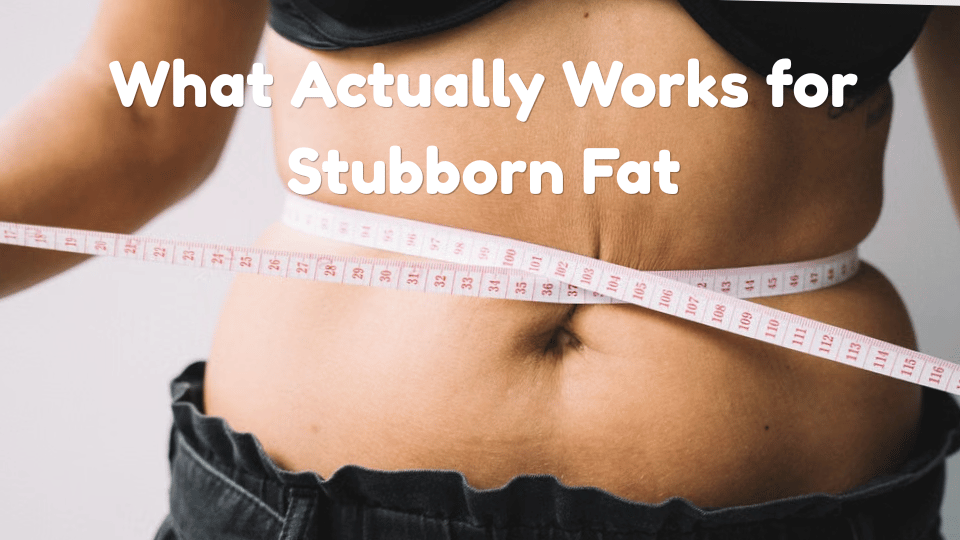
You swapped drive-through dinners for meal prep, bought a pair of adjustable dumbbells and hit your step goal most days. The scale responded. Your favorite jeans now button without a fight.
Yet one area hasn’t changed at all, whether it’s the lower belly, the outer thighs or the soft roll above the bra line. Fat that won’t go away with diet or exercise is common, with roots that are mostly biological. Genes, hormones and the receptors on individual fat cells all influence where your body stores fat and which areas it gives up last. Knowing how those pieces fit makes the treatment options for stubborn fat far less confusing.
Your Body Decides Which Fat Goes First
Fat loss runs on a whole-body schedule. During a calorie deficit, fat cells release stored energy into the bloodstream for working muscles to burn, no matter where that energy came from. That makes crunches a poor tool for shrinking a lower-belly pouch. In one 2007 study, 104 adults trained only their nondominant arm for 12 weeks, and MRI scans showed fat loss across the body with no special advantage for the trained arm. Researchers at the University of Sydney called spot reduction a myth and noted that genes can account for as much as 60% of where fat is distributed.
Receptors add another layer. Fat cells carry beta receptors that speed up fat release and alpha-2 receptors that slow it down. The lower abdomen, hips, thighs and chin tend to carry more of the slower alpha-2 type, along with weaker blood flow, so those spots often shrink last.
Because exercise can’t single out one area, reshaping a specific spot means removing or destroying the fat cells there. People already close to their goal weight often look into laser lipo for that purpose. The laser loosens fat ahead of suction through incisions just a few millimeters wide, a technique that falls under minimally invasive body contouring.
Is It Really Fat?
Plenty of bulges that look like stubborn fat turn out to be something else. Providers typically start with a pinch test and a hands-on exam, since several conditions can mimic a fat pocket:
- Loose skin after pregnancy or major weight loss, which folds thin and crepey with little tissue underneath
- Diastasis recti, a separation of the abdominal muscles that can push the belly outward
- Lipedema, a chronic condition marked by symmetrical, often tender fat in the legs or arms
- Visceral fat, which sits deep around the organs where no device or cannula can reach it
That last category often grows in midlife, when falling estrogen tends to move fat toward the belly and around the organs. Visceral fat generally responds to diet and cardio. Procedures target the pinchable layer just under the skin.
Liposuction Remains the Surgical Standard
Eyelid surgery overtook liposuction as the most performed surgical procedure worldwide in 2024. Even so, liposuction remained the most common surgical procedure among women, according to the International Society of Aesthetic Plastic Surgery’s annual survey.
Techniques range from moving a thin suction tube, called a cannula, by hand to newer versions that add a vibrating tip, ultrasound or laser energy.
Good candidates are generally within about 30% of their goal weight and have firm, elastic skin. Swelling peaks within the first few days, compression garments are usually worn for four to six weeks, and final contours can take six months or longer to settle. When loose skin or separated muscles dominate, surgeons often point patients toward a tummy tuck.
What Nonsurgical Devices Can Realistically Do
Nonsurgical body contouring procedures damage fat cells with controlled cold, heat or focused energy, and the body clears them over roughly eight to 12 weeks. One round of cryolipolysis, better known as fat freezing, typically reduces the fat layer in a treated area by about 20% to 25%. Heat-based radiofrequency treatments usually call for four to six sessions over several weeks. Downtime for these treatments tends to be minimal.
Fat freezing carries one rare complication, paradoxical adipose hyperplasia, which makes the treated area grow larger and firmer months later. Early manufacturer figures put the risk near 1 in 4,000 treatment cycles, but a 2025 review of 28 studies covering more than 13,000 patients found a pooled rate closer to 1 in 455. Treatment for it is usually surgical.
Among injectables, an investigational drug called CBL-514 trimmed abdominal fat by about 20% on MRI scans in a Phase 2b trial. The FDA has not approved it.
What Happens to Results Over Time
Adults keep a fairly steady number of fat cells. Dieting only shrinks them. Procedures remove or destroy the cells in a treated zone for good, yet the ones left behind can still expand. Weight gained after liposuction may settle around the abdomen regardless of which areas were treated, Mayo Clinic notes. With fewer cells left to fill, a treated zone typically expands less than untreated ones, which can gradually change overall proportions.
Strength training can visibly firm up an area while the scale barely moves. A body composition scale that separates fat from muscle tends to tell a more accurate story than weight alone.
Questions to Bring to a Consultation
A few pointed questions make clinics easier to compare:
- Is my concern mainly fat, loose skin or muscle separation?
- Which treatment suits this area, and how many sessions will it take?
- What complication rates have you seen, including paradoxical adipose hyperplasia?
- How long before I can return to work, workouts and school pickups?
Weighing the Options
Lingering pockets of fat are largely a product of genes, hormones and receptor patterns. Diet and exercise still shape the body as a whole and keep visceral fat in check. Procedures go after the localized deposits those habits leave behind. Surgery delivers the most change in one session, while devices trade smaller results for little downtime. Either way, an accurate assessment up front and a steady weight afterward help the result last.


