

If you have lemons coming out of your ears—or a very generous neighbor with a bountiful tree—don’t let that precious fruit go to waste! You can preserve lemons in salt, resulting in a glorious, tart, pickled rind that adds a punch of umami to your kitchen repertoire. Once processed, these are incredible sliced into stews, soups, tagines, fish dishes, and salad dressings.
Salted lemons are a staple in Moroccan cooking, but their uses are so versatile you’ll wonder why you haven’t been clearing out your citrus trees like this for years.

What You’ll Need
-
Fresh Lemons: (Approx. 8–10 per quart) Scrubbed clean. I recommend a good Veggie Wash to ensure no “nature” is left behind—think jet fuel, bird deposits, and general garden grime.
-
Kosher Salt: Avoid table salt with iodine, as it can turn the lemons dark or cloudy.
-
Sterilized Quart Jars: Ensure your lids are also clean and rust-free.
How to Prepare
-
Prep the Jar: Start by putting 1 teaspoon of salt at the bottom of your sterilized jar.
-
The Cut & Salt: Slice your lemons into halves and then quarters. Work in batches; place about 8 pieces in a bowl and toss them until they are well-coated in a thin layer of salt.
-
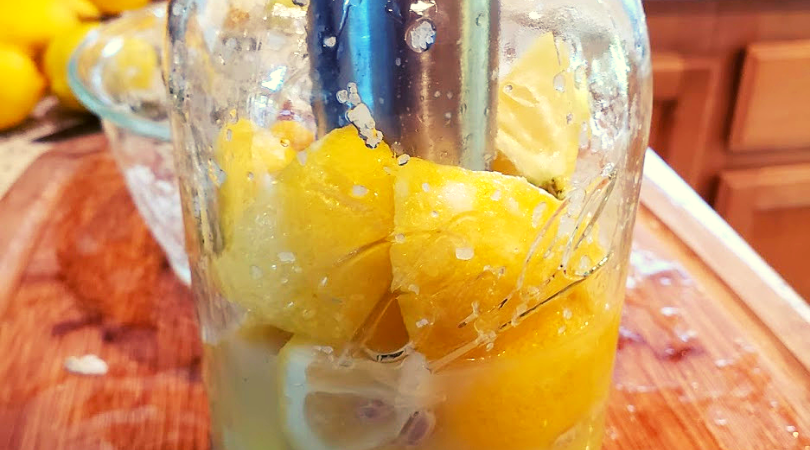
The “Stuffing” Phase: Pack the lemons into the jar. Don’t be gentle! I use a metal rolling pin to press them down firmly. You want to bruise them enough to release their juices.
-
Repeat & Fill: Keep layering salt-coated lemons and mashing them down until the jar is completely full. You’ll be surprised at how many you can fit in there.
-
The Brine Check: Ensure the lemons are completely submerged in their own salted juice. If the liquid doesn’t cover them by the time you reach the top, simply squeeze an extra lemon and pour the juice over them until EVERYTHING is underwater. Floating lemons can lead to mold, and we want preservation, not a science project.
-
The Cure: Seal the jar and let it sit on your counter for 3–4 weeks. Give the jar a shake every day or so to move the brine around and keep the salt distributed.
-
The Finished Product: You’ll know they’re ready when the rinds become somewhat translucent and the liquid thickens into a syrup-like consistency.

Tips for Success
-
Keep it Clean: Always use a clean utensil when retrieving a lemon. Introducing a dirty fork or spoon can contaminate the whole batch.
-
Rind Only: When you’re ready to cook, pull a piece out and rinse it under cold water. The “flesh” of the lemon becomes a salty, pulpy mess that has done its job—discard that and just use the delicious, softened rind.
-
Storage: You can move them to the fridge if it makes you feel better, but the high acid and salt content will keep them perfectly preserved on a cool, dark shelf for months without refrigeration.
Enjoy and have fun experimenting with the delicious world of preserved lemons!


