Hiring a contractor can feel like a major leap of faith, especially when the project affects the place where your family lives every day. Most homeowners are not experts in home repair, so evaluating a contractor often comes down to asking good questions and paying attention to how the business operates. A few warning signs can help families avoid expensive disputes and unfinished projects.
They Will Not Provide a Detailed Written Estimate
A quote should give you more information than one final number. Look for details about labor, materials, project scope, payment terms, and any major exclusions. Be cautious if a contractor relies primarily on verbal promises or refuses to put important details in writing. Without documentation, disagreements over what was included in the original price become much harder to resolve.
They Want Too Much Money Upfront
Deposits are common for home projects, particularly when materials must be ordered. Asking for most or all of the project cost before work begins is different.
A payment schedule tied to clear project milestones gives homeowners a way to see progress before releasing additional funds. Before paying anything, make sure payment terms are documented in the contract.
Credentials Are Difficult to Verify
Licensing and insurance requirements vary by location and type of work, so homeowners should check applicable state and local rules. Ask for documentation rather than accepting a verbal assurance. If you are hiring a siding contractor, for example, you can also request recent references for similar siding projects rather than references for unrelated home repairs.
They Create Pressure to Sign Immediately
Be skeptical of contractors who insist that a price is available only if you sign immediately. Homeowners should have enough time to review the scope, compare estimates, check references, and read contract terms. High-pressure tactics are particularly concerning after storms, when homeowners may already feel rushed to repair damage.
Communication Is Poor Before Work Starts
Pay attention to missed appointments, unanswered questions, vague scheduling, and inconsistent explanations during the estimate process. Communication rarely becomes easier once a project is underway. A contractor does not need to respond instantly, but you should know who your contact is and how project changes will be communicated.
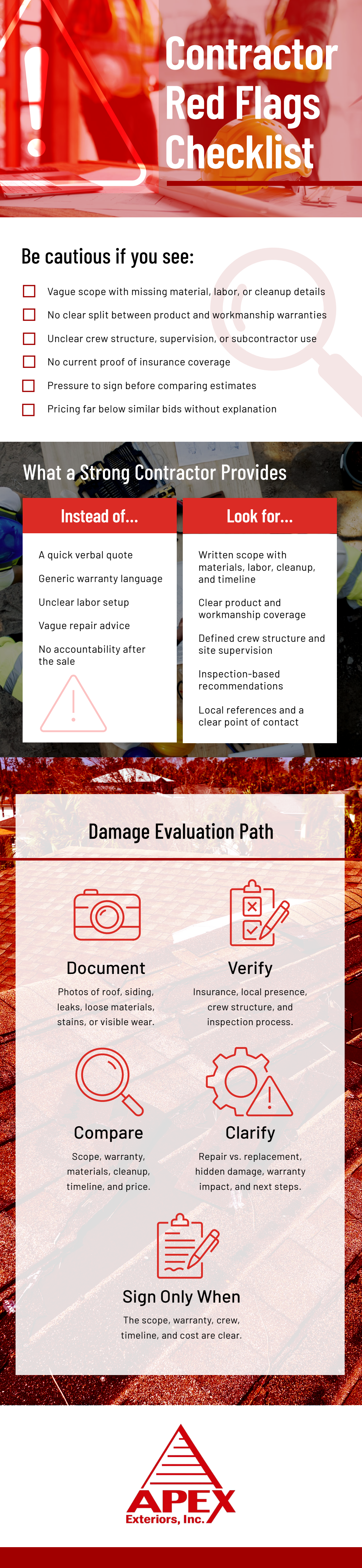
Choosing a contractor should involve more than comparing prices. Written estimates, verifiable credentials, reasonable payment terms, references, and consistent communication provide useful evidence about how a company operates. Check out the infographic below for more information.