Food spoilage affects more than grocery bills. Every year, families throw away large amounts of food due to forgotten leftovers, expired products, and improper storage. While tossing spoiled food may seem like a small household problem, the long-term impact reaches family budgets, environmental health, and personal wellness.
Food Waste Adds Up Financially
Spoiled food quietly increases household spending over time. Fresh produce, dairy products, meat, and leftovers are common items that go unused before families can eat them. Buying too much food during grocery trips or losing track of expiration dates often leads to waste.
Small losses each week may become hundreds or even thousands of dollars each year for larger families. Meal planning may help reduce unnecessary purchases and improve food usage. Labeling leftovers clearly and organizing refrigerators regularly may also help families use food before it spoils.
Storage containers and packaging also affect freshness. Some companies now use custom corrugated plastic boxes during transportation and storage to help reduce product damage and moisture exposure before food even reaches stores.
Environmental Effects Reach Beyond the Kitchen
Food waste creates environmental problems that many people rarely consider. Growing, packaging, shipping, and storing food all require water, fuel, electricity, and labor. When spoiled food gets thrown away, those resources are wasted as well.
Food waste in landfills may also produce methane gas, which contributes to air pollution and climate concerns. Reducing household food waste may help lower pressure on farms, transportation systems, and waste facilities over time. Simple habits such as freezing extra food or using leftovers creatively may reduce environmental strain while saving money.
Spoiled Food May Affect Family Health
Improperly stored food may increase health risks inside the home. Bacteria may grow quickly on foods left out too long or stored at unsafe temperatures. Spoiled food may cause stomach illness, vomiting, or food poisoning, especially in children and older adults.
Families should pay close attention to expiration dates, refrigerator temperatures, and food handling practices. Raw meat should remain separated from ready-to-eat foods, and leftovers should be refrigerated promptly after meals. Clean refrigerators and organized pantry spaces may also reduce accidental spoilage.
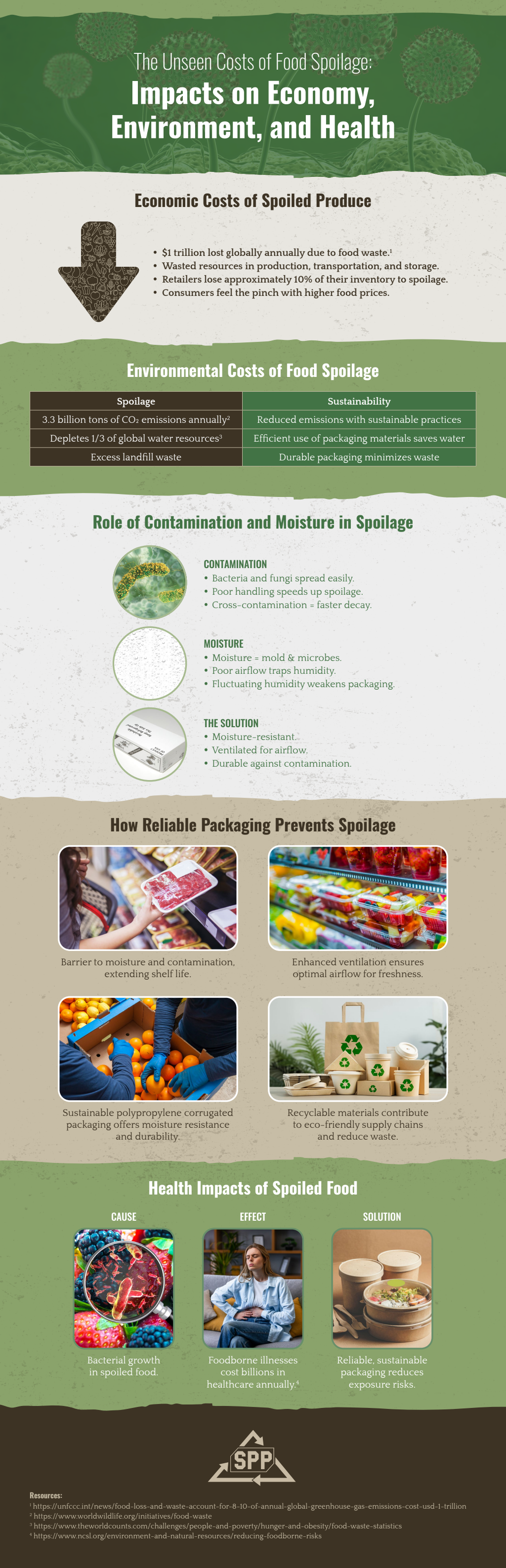
Food spoilage affects household budgets, environmental resources, and family health more than many people realize. Better storage habits, meal planning, and food safety practices may help families reduce waste while creating healthier and more cost-conscious routines at home. Check out the infographic below for more information.