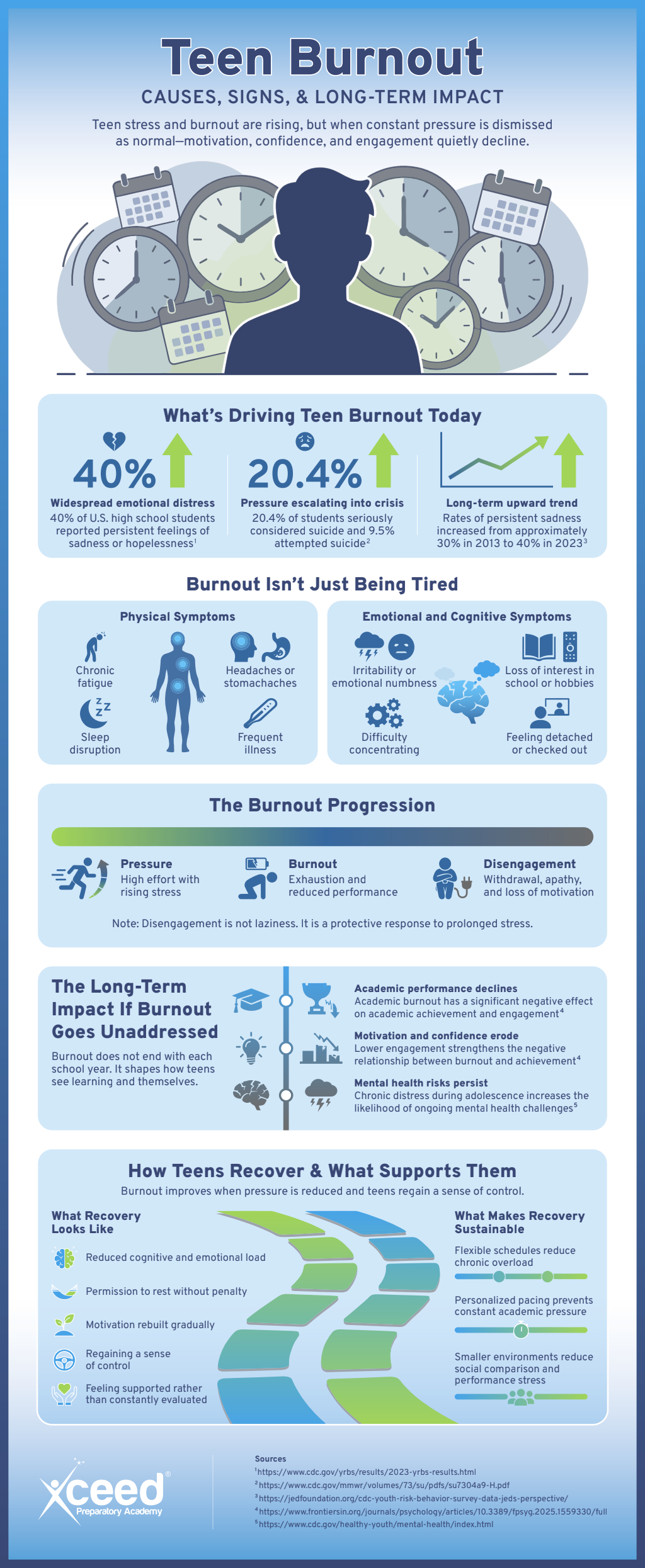
Teenagers today juggle academic pressure, social expectations, extracurricular commitments, and digital life all at once. While some stress can motivate growth, constant strain without recovery can lead to burnout. For parents, recognizing the difference between normal fatigue and chronic overwhelm is essential. Early awareness creates space for support before exhaustion turns into anxiety, depression, or withdrawal.
Common Causes of Teen Burnout
Academic demands often top the list. Advanced coursework, standardized testing, and competitive environments can push teens to tie self-worth to performance. Students in highly competitive settings, including some private schools, may feel pressure to maintain perfect grades while also building impressive resumes.
Overscheduling adds another layer. Sports, clubs, part-time jobs, and volunteer work can crowd out downtime. Social media also amplifies comparison, making teens feel they must constantly achieve and present success. Family expectations, even when well-intended, can reinforce the belief that rest equals laziness.
Chronic sleep deprivation plays a major role. Early school start times and late-night screen use disrupt natural sleep cycles, leaving teens physically drained and emotionally reactive.
Signs Parents Should Notice
Burnout does not always look dramatic. Subtle shifts often appear first. A teen who once enjoyed school may suddenly seem indifferent or irritable. Grades can slip despite long study hours. Procrastination may increase, not from lack of care but from mental fatigue.
Physical symptoms also matter. Frequent headaches, stomachaches, and changes in appetite can signal prolonged stress. Sleep disturbances, either insomnia or excessive sleeping, are common. Emotional changes such as mood swings, tearfulness, or heightened anxiety deserve attention from parents.
Social withdrawal can follow. Teens may pull away from friends or family conversations. Statements like “What’s the point?” or “I’m just tired of everything” suggest deeper exhaustion than ordinary stress.
The Impact on Mental Health and Development
Extended burnout affects more than academic performance. Persistent stress elevates cortisol levels, which can impair concentration and memory. Emotional regulation becomes harder, increasing the risk of anxiety disorders or depressive symptoms.
Self-esteem often declines as teens equate exhaustion with personal failure. Motivation drops, and activities that once brought joy feel burdensome. Without intervention, burnout can shape long-term attitudes about work, achievement, and self-worth.
Addressing burnout requires open conversation, realistic expectations, and protected rest. Encouraging balance, sleep hygiene, and manageable schedules supports healthier growth. Professional counseling may help when symptoms intensify or persist. For more information on teen burnout, feel free to look over the accompanying resource below.