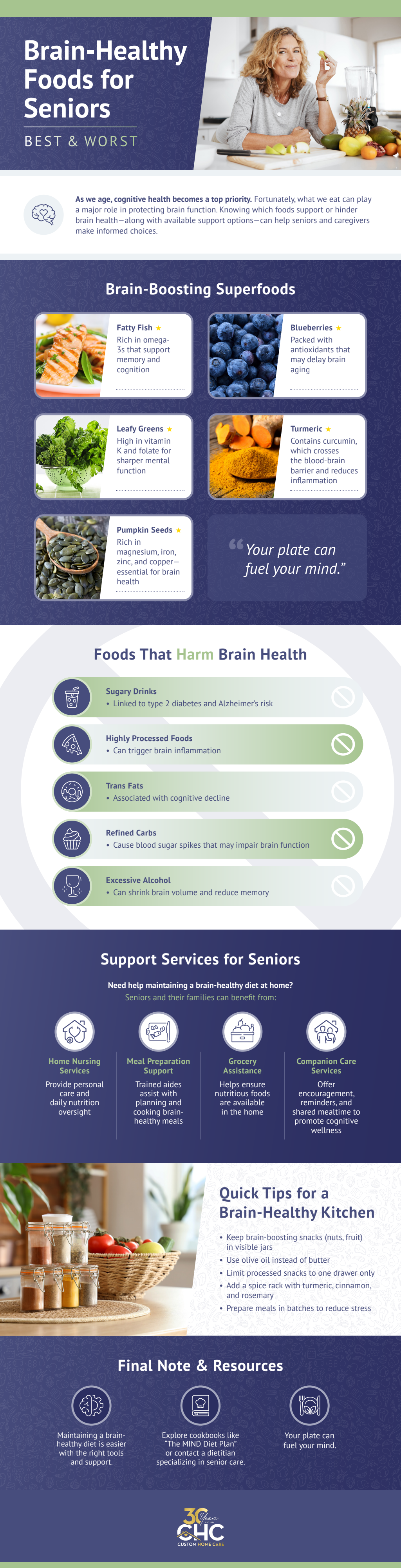
Food choices play a key role in brain health, especially for older adults. As the body ages, the brain needs steady support to maintain memory, focus, and mood. Families often help plan meals, which makes it important to know which foods support mental function and which ones may work against it.
Foods That Support Brain Health
Certain foods are known to help keep the brain active and strong. Leafy greens such as spinach and kale provide vitamins that support memory. Berries contain antioxidants that help protect brain cells from damage.
Fatty fish like salmon and tuna offer omega-3 fatty acids, which support brain structure and function. Nuts and seeds also provide healthy fats and are easy to add to snacks or meals.
Whole grains, such as oats and brown rice, supply steady energy. This helps the brain stay alert throughout the day. These foods are easy to include in meals without major changes to routine.
Foods That May Limit Brain Function
Some foods can have a negative effect on brain health when eaten often. Highly processed items, including packaged snacks and fast food, may contain additives and unhealthy fats. These can affect focus and long-term brain function.
Sugary foods and drinks can lead to quick energy spikes followed by crashes. This may affect mood and concentration. High-sodium foods can also impact blood pressure.
Building Balanced Meals
Balanced meals support both physical and mental health. Combining protein, healthy fats, and whole grains helps maintain steady energy levels. Adding fruits and vegetables increases nutrient intake without making meals complicated.
Hydration is also important. Drinking enough water supports circulation, which helps deliver nutrients to the brain. Small habits, such as keeping water nearby, can make a difference. Families who assist with meal planning, including those working in caregiver jobs, often play a key role in building these routines.
Making Changes That Last
Long-term habits are more effective than quick changes. Gradually adding brain-healthy foods while reducing less helpful options makes the process easier to maintain.
Planning meals ahead of time can reduce stress and support better choices. Keeping healthy snacks available also helps avoid reaching for processed foods.
Brain health depends on daily choices, and food is a major part of that process. With the right balance of nutrients and steady habits, seniors can support memory, focus, and overall well-being. Look over the infographic below to learn more.