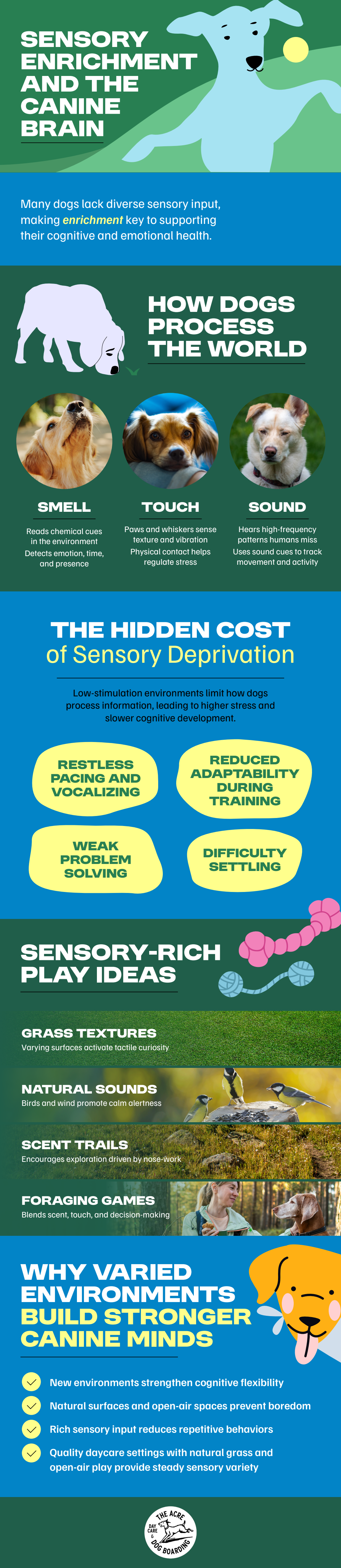
Family life can get busy, and dogs often adapt quietly to shifting schedules, noise levels, and limited outdoor time. While daily walks and meals meet basic needs, mental stimulation plays a powerful role in long-term canine health. Sensory enrichment offers a practical way for moms to support their dog’s brain development while strengthening the bond between pet and family.
Why the Canine Brain Needs Stimulation
Dogs experience the world primarily through scent, sound, and movement. Their brains are wired to process sensory information quickly, especially smells. When those systems are underused, boredom and frustration can surface as chewing, barking, or restlessness. For dogs that also benefit from structured time away from home, dog boarding programs can add another layer of routine, stimulation, and supervised care.
Research in animal behavior shows that mental stimulation can reduce stress and improve problem-solving skills. Engaging a dog’s senses encourages neural activity, helping maintain cognitive function across all life stages. Puppies benefit from early enrichment because it builds confidence, while older dogs gain support against cognitive decline.
Scent Work and Problem Solving at Home
Simple scent-based games activate large areas of the canine brain. Hiding small treats around a room and encouraging a dog to search mimics natural foraging behavior. Puzzle feeders and snuffle mats also challenge concentration and patience.
Rotation matters. Introducing new textures, scents, or toys every few days keeps the experience fresh. Cardboard boxes filled with safe materials, such as crumpled paper, can become exploration stations. Supervised variety helps prevent overstimulation while still promoting curiosity.
Short sessions are often more effective than long ones. Ten focused minutes of scent work can tire a dog mentally in ways that physical exercise alone cannot.
Sound, Movement, and Social Interaction
Controlled exposure to different sounds builds resilience. Playing recordings of thunderstorms at low volume or introducing new household noises gradually can reduce anxiety over time.
Movement-based enrichment also supports brain health. Obstacle courses made from cushions and chairs challenge coordination and focus. Teaching new cues or tricks stimulates memory and strengthens communication between parent and pet.
Social enrichment is equally important. Playdates with other friendly dogs or structured time at a reputable dog care center provide supervised interaction that engages both social and cognitive skills.
Supporting a dog’s mental life does not require elaborate tools. Small, consistent activities woven into a family routine can nurture emotional stability and sharper thinking. Sensory enrichment strengthens the canine brain while deepening the connection that makes a dog such a valued member of the household. To learn more, feel free to look over the infographic below.