
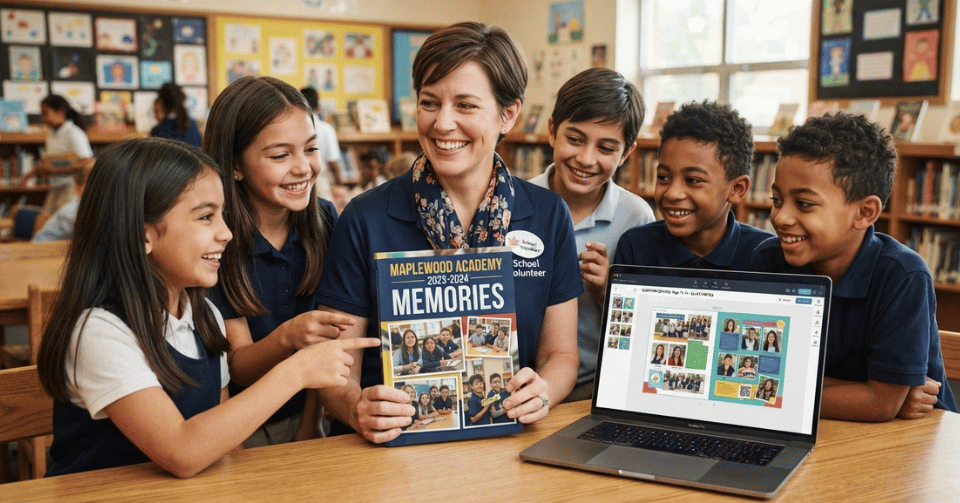
Somewhere between the class party sign-up sheet and the spring fundraiser, someone volunteers to “just handle the yearbook.” What follows is usually a scramble through three years of blurry field trip photos and a quote from a publisher that wants a signed multi-year agreement and a 75-copy minimum. It does not have to work that way anymore. The tools below let a parent volunteer build a real book without locking the school into anything.
Why minimums and contracts still matter in 2026
Traditional yearbook publishers built their pricing around offset printing, which only makes financial sense at volume. That is where minimum orders came from: the printer needs a guaranteed run, so the school commits to 75, 100 or 150 copies before a single photo is uploaded. If only 60 families buy, the leftover books sit in a supply closet and the PTA eats the difference.
Multi-year contracts followed the same logic. A publisher that invests in a sales rep and a design consultation wants three years of business to justify it. For a large high school with a staffed journalism program, that arrangement can be reasonable. For an elementary school, where the yearbook is just one exhausted parent and a shared Google Photos album, this arrangement is a liability.
Digital printing changed the math. Print-on-demand and short-run digital presses make a 30-copy order economically viable, which is why nearly every modern platform now advertises no minimums. Most American schools are small enough that flexible ordering is the only thing that makes a yearbook happen at all, and a single-classroom or preschool book would never clear a traditional publisher’s threshold.
The 6 best online yearbook makers of 2026
Each of these platforms lets schools order the exact number of books they need without signing a long-term agreement. They differ mainly in who they are built for.
1. Mixbook
Mixbook started as a consumer photo book company and brought that design polish into the school market, which is why its editor feels closer to Canva than to legacy yearbook software. Schools get 78 customizable yearbook themes, books of up to 400 pages, and an unlimited number of photos per project. Templates and design tools are free, contracts are never required, and the bulk discount kicks in at ten copies rather than seventy-five.
The operational side is what makes it work for volunteers. A School Dashboard collects parent preorders and payments online and tracks them in real time, so the person running the book knows the print quantity before the deadline. Standard shipping is free on orders of ten or more, and printing runs two weeks or less, which is short enough to include spring events. Mixbook reports more than 612,000 yearbooks printed for over 5,000 schools across roughly two decades, so the school-specific workflows are well tested rather than bolted on.
It suits anyone who wants a book that looks designed rather than assembled. Anyone who has put together a family photo album will recognize the editing approach immediately, and those same instincts transfer directly to a classroom book. Among the online yearbook makers built for schools, it strikes the best balance between design quality and low administrative overhead. The editor also supports both simple and more detailed page layouts.
Best for: elementary schools, preschools, private schools, PTAs, classroom books and first-time advisers.
2. Lulu: best for one-off books and non-school groups
Lulu is a general print-on-demand publisher rather than a yearbook specialist, and for some groups that is exactly right. There are no contracts and no minimums in the literal sense: Lulu’s yearbook printing will run a single copy or a thousand. Free templates cover the layout, and options include saddle stitch, perfect bound, and hardcover, with landscape formats aimed at club and company books. Books can ship directly to individual students, and buyers can order their own copies from Lulu’s bookstore rather than going through a school coordinator.
Best for: sports teams, scout troops, band programs, homeschool families and adult groups making a commemorative book.
3. Entourage Yearbook
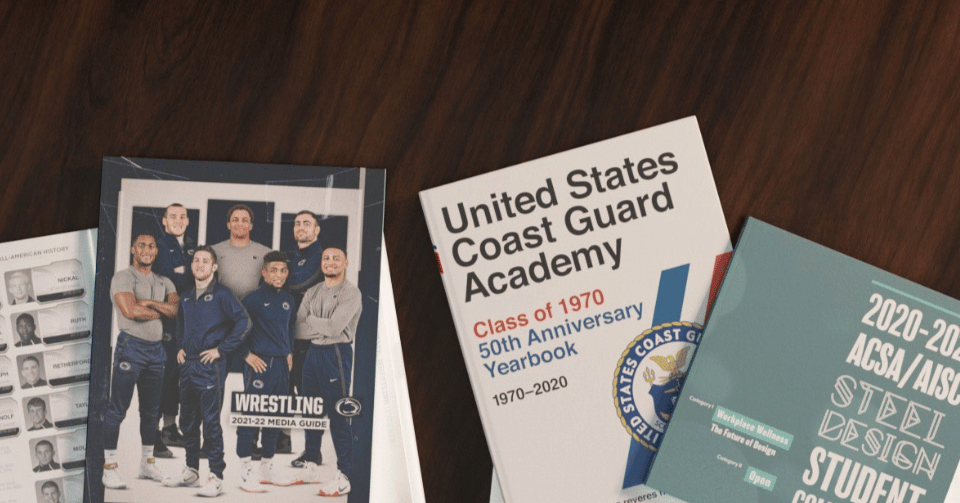
Entourage sits between the consumer platforms and the legacy publishers. Its EDONext yearbook design software handles database-driven page generation and portrait imports, which is what a student staff needs to produce a full high school book, but the commercial terms stay flexible. Contracts are non-binding, and no payment is required upfront, so yearbook sales themselves can fund the project across the school year.
The flexibility extends past the paperwork. Schools can adjust quantity, page count or delivery date as the year develops without penalty, and turnaround runs around 28 days. Each project gets an account manager plus design review by professional graphic designers, and the platform supports per-student personalized pages and foil-stamped name customization. Advisers who prefer their own tools can download InDesign, Photoshop and Illustrator templates instead. In 2026, the company also opened a free tier of its bookmaking software to US educators for smaller projects like event programs and classroom anthologies, with no trial period or expiration.
Best for: middle and high schools with a journalism class or student yearbook staff.
4. Picaboo Yearbooks
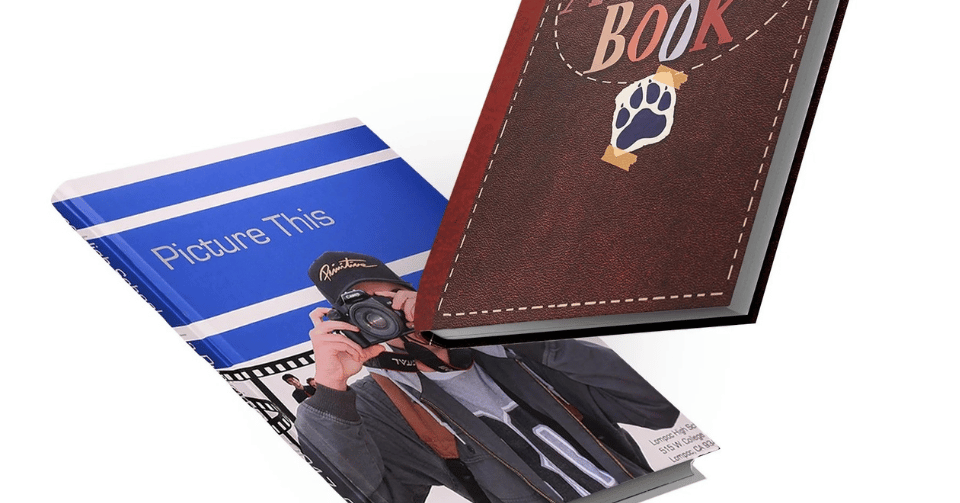
Picaboo Yearbooks runs on a digital and print hybrid model with no minimum orders, printing on demand so a school with 40 students pays for 40 books. Its Personalized Yearbook Service pairs advisers with support staff, which matters when the adviser is a teacher doing this on top of a full teaching load. Books can be designed entirely in the browser, printed on demand, and shared digitally alongside the print run.
Best for: small private schools, microschools, homeschool co-ops and single-classroom books.
5. TreeRing
TreeRing’s signature feature is genuinely different from everything else on this list. Every student gets two free custom pages that print only in their own copy of the book, filled with their own photos and memory prompts. Families who want more can buy additional page spreads for a couple of dollars each, and the school pays nothing extra either way. Students can also sign each other’s books online, with signatures flowing onto those personal pages.
Everything is print-on-demand, so the school orders exactly what parents buy and never carries unsold inventory. There are no minimums or contracts, the design app is free, and there is no cap on collaborator seats. Books are printed on 100 lb paper with a choice of hard or soft covers and optional foil finishes, and the platform offers over 250 themes.
Best for: schools that want families involved in the book and districts trying to escape unsold-inventory losses.
6. Canva: best free design route
Canva is not a yearbook company, but plenty of schools use it as one. The free education tier gives unlimited access to templates and drag-and-drop editing that students genuinely enjoy using, and it turns the yearbook into a legitimate classroom design project. When the book is finished, the school exports a print-ready PDF and sends it to any printer, including several of the companies above.
Best for: schools with a design-minded teacher, a small book and more time than budget.
What to look for in an online yearbook maker
Portrait import matters more than template count. If the school photographer supplies a PSPA disc or folder, the platform should build class panel pages automatically from it. Placing 400 headshots by hand is the single biggest time sink in yearbook production.
Collaboration determines whether the job stays with one person. Look for multiple editor seats, page-level locking or check-out, and the ability to see who changed what. Some platforms only allow one editor at a time, which is fine for a classroom book and painful for a school-wide one.
Sales and payment handling are underrated features. Platforms that collect parent preorders online spare the volunteer a shoebox of cash and checks, and they tell you the print quantity before the deadline instead of after.
Print specs are worth reading. Paper weight, binding style and cover finish do more for how a book ages than any template. Saddle stitch is fine for thin classroom books; perfect binding or Smyth sewn holds up better for anything over about 60 pages.
Turnaround and deadline flexibility determine whether spring events are included. A 28-day turnaround means the yearbook can include the May field day. A ten-week turnaround means it cannot.
Getting photo permissions right before you start
This is the step that derails yearbooks after the fact rather than before. Student photographs are frequently designated as directory information, which lets a school publish them in a yearbook without individual written consent, but only if parents receive annual notice and a real chance to opt out. The Department of Education’s guidance on photos and videos under FERPA explains when an image counts as an education record, and the short version is that context matters: a posed portrait is treated differently from a wide shot where a child appears in the background.
Practically, the yearbook coordinator needs the school’s current opt-out list before layout begins, not after. Cross-check the portrait file and candid photos, and note which pages contain group shots so that a late opt-out does not require reworking the whole book.
The same care applies to how photos get collected. Shared albums and parent uploads are convenient, but they scatter children’s images across accounts nobody is managing. It fits into the broader conversation about teaching kids about online safety, and a single school-controlled upload link is a better habit than a group chat where photos circulate indefinitely.
Making the book last longer than the school year
Yearbooks are keepsakes, and the physical choices decide whether one survives thirty years in a garage. Binding is the first decision: a stapled saddle-stitch book is inexpensive and fine at 40 pages, but the staples eventually tear through. Perfect binding or Smyth sewn binding costs more per copy and holds together far longer.
Paper weight is the second. Heavier stock resists creasing and shows less ink bleed-through on double-sided photo pages, which is why the better school platforms print on 100 lb text weight rather than something lighter.
Storage is the part nobody mentions. Books last longest when stored upright with support on either side, away from direct light and protected from major changes in humidity. A shelf in a climate-controlled room is far better than an attic or cellar.
It also helps to think of the yearbook as one piece of a larger record rather than the whole thing. The same logic behind recording a child’s milestones as they happen applies here: a book that arrives every June is only useful if the photos, ticket stubs and class lists feeding it were kept somewhere sensible during the year.
Frequently asked questions
Do any yearbook companies really have no minimum order?
Yes. Mixbook, TreeRing, Picaboo Yearbooks and Lulu all print without a minimum quantity requirement. They use digital and print-on-demand presses rather than offset printing, so a 25-copy run is economically viable. Bulk discounts still apply at higher volumes, typically starting around ten copies.
How much does a school yearbook cost per book?
Per-book price depends on page count, cover type, binding and quantity, so most companies quote rather than publish a flat rate. A thin softcover classroom book sits at the low end, while a thick hardcover with foil detailing costs several times more. Request quotes from two or three platforms with the same specs to compare fairly.
How long does it take to make a yearbook?
Design time varies from about a week for a simple auto-generated classroom book to several months for a full high school volume built by student staff. Printing and shipping are more predictable, usually taking roughly two to four weeks, depending on the company. Work backwards from your distribution date and add two weeks of buffer.
Can parents pay for the yearbook in advance?
Yes, and it is the standard approach now. Several platforms collect parent preorders and payments online through a school dashboard, so the money arrives before the print order is placed. Some companies also allow the school to add a margin to each book as a fundraiser.
What is the best yearbook maker for elementary schools?
Elementary schools generally do best with a platform that prioritizes ease of use and low administrative burden over advanced journalism features. Mixbook, TreeRing and Picaboo Yearbooks all fit that description. The deciding factor is usually whether you want personalized student pages or the strongest template library.
Do we need special software or a design background?
No. Every platform on this list runs in a web browser with drag-and-drop editing and pre-built templates. A parent who can make a photo book online can make a yearbook. Advisers who prefer professional tools can use InDesign or Photoshop templates with some companies instead.
Can students work on the yearbook from home?
Usually yes. Cloud-based platforms let multiple collaborators log in from any device, which is how student staff work on pages outside class time. Check how many editor seats are included and whether the platform prevents two people from editing the same page at once.
How many pages should a school yearbook be?
There is no fixed number. A preschool or classroom book often lands between 20 and 40 pages, while a high school volume can run well past 200. Start with a template, map out the sections you need for clubs, events and portraits, and let the page count follow the content.
What is a PSPA file and do we need one?
PSPA is the standard format school photographers use to deliver student portraits along with names and grade data. Platforms that support PSPA import can build class panel pages automatically instead of requiring manual placement. If your school uses a professional photographer, ask for the file and confirm your platform accepts it.
Can we make a digital yearbook instead of printing one?
Some companies offer a digital or flipbook version alongside or instead of print. It is cheaper, instantly shareable and useful for families who miss the order deadline. Most schools still print at least a small run, since a screen version does not get signed at the end of the year.
What happens if we order too few books?
With print-on-demand companies, this is a smaller problem than it used to be. Late orders can often be placed as a second run, though they ship separately and may cost more per copy. Platforms with online preorder tracking make undercounting much less likely in the first place.
Which one to choose
The right platform depends less on features than on who is doing the work. If the yearbook is one volunteer with a shared photo album, pick the option with the strongest templates and built-in order collection. If it is student staff with a portrait database and a deadline ladder, pick the one with real production tooling. Either way, no school in 2026 needs to sign a three-year agreement or commit to a print run before knowing how many families want a copy.


