
Critical Scenarios Requiring Emergency Plumbing and HVAC Repairs
When disaster strikes your home’s essential systems, knowing what truly constitutes an emergency is paramount. Not every system hiccup warrants a 24/7 service call, but certain situations demand immediate attention to prevent extensive property damage, ensure safety, and restore essential comfort. As of September 2026, homeowners are increasingly aware of the need for rapid response to protect their investments and well-being.
A plumbing or HVAC emergency is typically defined by its potential to cause immediate harm to people or property. This includes scenarios where there’s a risk of structural damage, health hazards, or significant disruption to daily life. For instance, a burst pipe can quickly flood a home, leading to costly water damage and potential mold growth. Similarly, a furnace failure in sub-freezing temperatures can pose a severe health risk, especially for vulnerable populations.
Consider the following scenarios as clear indicators for an urgent, after-hours service call:
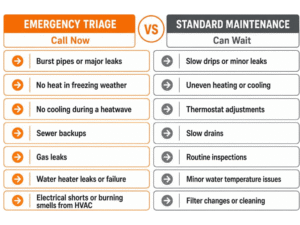
- Burst Pipes or Major Leaks: Uncontrolled water flow can cause rapid and severe damage to floors, walls, and foundations.
- No Heat in Freezing Weather: During winter months, a malfunctioning furnace or boiler can lead to dangerously low indoor temperatures, risking frozen pipes and hypothermia.
- No Cooling During a Heatwave: Extreme summer temperatures can lead to heatstroke and other health issues if the air conditioning system fails.
- Sewer Backups: Raw sewage overflowing into your home presents a significant health hazard due to bacteria and pathogens.
- Gas Leaks: The smell of natural gas is an immediate danger, indicating a potential explosion or carbon monoxide poisoning.
- Water Heater Leaks or Failure: A leaking water heater can cause flooding, while a complete failure deprives a home of hot water, impacting hygiene and sanitation.
- Electrical Shorts or Burning Smells from HVAC: These can indicate a fire hazard within your heating or cooling system.
Understanding the difference between an urgent crisis and a problem that can wait for standard business hours is crucial for effective home management.
Identifying Plumbing Crises
Plumbing emergencies often involve water, but not all water issues are equal. A slow drip from a faucet, while annoying, can usually wait. However, a sudden, uncontrolled gush of water is a different story entirely.
- Pressurized Leaks: These are leaks from pipes under constant water pressure, such as supply lines. A visible crack or rupture in a main water line or a pipe behind a wall can release gallons of water per minute, quickly overwhelming your home. The sound of running water when no fixtures are in use, or a sudden drop in water pressure, can also signal a hidden pressurized leak.
- Main Water Line Issues: Problems with your home’s main water supply line, whether it’s a leak or a complete rupture, can cut off your entire water supply or cause significant external flooding. Knowing the location of your main water shut-off valve is critical in these situations.
- Overflowing Toilets: A continuously overflowing toilet, especially if the internal shut-off mechanism fails, can lead to substantial bathroom or floor damage. While often a simple fix, if the water won’t stop, it becomes an emergency.
- Sump Pump Failure and Basement Flooding: For homes with basements, a failing sump pump during heavy rain or snowmelt can result in rapid basement flooding, damaging property and creating conditions for mold growth.
- Water Heater Leaks or Complete Failure: A water heater that is actively leaking from its tank or connections can cause water damage. Furthermore, a complete failure means no hot water for showers, dishes, or laundry, which is a significant inconvenience, particularly in larger households. If the leak is substantial or accompanied by strange noises or smells (like gas or burning), it requires immediate assessment.
Recognizing Heating and Cooling Emergencies
HVAC systems are vital for maintaining comfortable and safe indoor temperatures. Their failure, especially during extreme weather, can quickly turn into an emergency.
- No Heat in Sub-Freezing Temperatures: This is perhaps the most common HVAC emergency. When outdoor temperatures plummet, a non-functional furnace or boiler not only makes your home uncomfortably cold but also puts your plumbing at risk of freezing and bursting. This is a critical safety issue, particularly for families with infants, elderly members, or individuals with health conditions.
- No Cooling During a Heatwave: Conversely, during periods of extreme heat, a malfunctioning air conditioning system can lead to dangerous indoor temperatures. Heat exhaustion and heatstroke are serious concerns, making AC repair an emergency, especially in regions prone to high humidity and prolonged heatwaves.
- Failed Compressors or Frozen Coils: These are often symptoms of a larger AC problem and can lead to complete system shutdown. A frozen coil, for instance, indicates an airflow issue or low refrigerant, which can damage the compressor if not addressed promptly.
- Electrical Shorts or Burning Smells: Any burning odor, visible smoke, or sparks coming from your furnace or AC unit indicates an immediate fire hazard. These situations require the system to be shut down immediately and professional help to be called.
- Carbon Monoxide Leaks: While not always an HVAC failure, a faulty furnace or water heater can produce carbon monoxide, an odorless, colorless, and deadly gas. Symptoms like dizziness, nausea, and headaches, or the activation of a CO detector, demand immediate evacuation and emergency service.
Immediate Action Steps Before Technicians Arrive
When faced with a plumbing or HVAC emergency, your immediate actions can significantly mitigate damage, ensure safety, and prepare the way for efficient repairs. Knowing these steps can turn a potential disaster into a manageable situation.
Immediate Steps for Emergency Plumbing and HVAC Repairs
The first few minutes after discovering an emergency are crucial. Your priority should be safety and minimizing further damage.
- Locate and Shut Off the Main Water Valve: For any significant plumbing leak or burst pipe, finding and turning off your home’s main water supply is the single most important step. This valve is typically located where the water line enters your home, often in the basement, near the water heater, or outside near the meter. Turning it clockwise usually shuts off the water. This action immediately stops the flow, preventing further flooding and water damage.
- Turn Off the Circuit Breaker: If you suspect an electrical issue with your HVAC system, or if water is near electrical outlets or appliances, immediately go to your electrical panel and switch off the relevant circuit breaker. For a complete system shutdown, you might need to turn off the main breaker for your entire home or the dedicated breaker for your furnace or AC unit.
- Thermostat Reset and Filter Check: For heating or cooling issues, perform basic troubleshooting. Ensure your thermostat is set to the correct mode (heat/cool) and temperature, and check its batteries. A simple reset of the thermostat can sometimes resolve minor glitches. Also, check your air filter; a clogged filter can severely restrict airflow, leading to system inefficiencies or even complete shutdown.
- Water Drainage and Containment: For leaks, use buckets, towels, or wet/dry vacuums to contain and remove as much water as possible. This helps prevent saturation of building materials and reduces the risk of mold growth. If a pipe has burst, you might need to open nearby faucets to help drain the remaining water from the system.
- Clear the Area: Ensure the area around the emergency is clear of obstructions, making it easier and safer for technicians to access the problem once they arrive.
By taking these proactive measures, you not only protect your home but also provide a safer and more efficient environment for the emergency plumbing and HVAC repairs team. For urgent situations, you’ll want to ensure you’re calling a service that offers comprehensive 24/7 emergency repairs to address your immediate needs.
Safety Protocols for Gas Leaks and Contaminants
Gas leaks and other hazardous contaminants are among the most dangerous emergencies you can face. Your immediate response can be life-saving.
- Gas Leaks (Mercaptan Odor): Natural gas is naturally odorless, but utility companies add a chemical called mercaptan, which gives it a distinctive rotten egg smell. If you detect this odor:
- Evacuate Immediately: Get everyone, including pets, out of the house. Do not delay.
- Do NOT Use Electrical Devices: Avoid turning lights on or off, using cell phones indoors, or operating any appliances. A spark could ignite the gas.
- Do NOT Open Windows: While it might seem intuitive, opening windows can sometimes worsen the situation by creating airflow that spreads the gas. Evacuate first.
- Call 911 and Your Gas Utility from Outside: Once you are a safe distance away, call emergency services (911) and your local gas utility company.
- Do NOT Re-enter: Do not go back inside until emergency personnel have deemed it safe.
- Sewer Gas: The smell of sewer gas (often like rotten eggs or sulfur) can indicate a dry drain trap, a clogged vent pipe, or a more serious sewer line issue. While less immediately explosive than natural gas, prolonged exposure can cause health issues, and it can be a sign of a larger plumbing problem.
- Ventilate: Open windows and doors to air out the area.
- Check Drains: Pour water down unused drains to ensure traps are full.
- Call a Plumber: If the smell persists, have a professional diagnose the source.
Always prioritize personal safety above all else. Never attempt to locate or repair a gas leak yourself.
Selecting a Reliable 24/7 Service Provider
When an emergency strikes, the last thing you want to do is scramble to find a trustworthy repair service. Having a reliable 24/7 provider on speed dial is essential. But how do you choose one that will deliver when it matters most?
- Licensing and Insurance: Always verify that the company and its technicians are fully licensed and insured. This protects you from liability in case of accidents or substandard work. A reputable company will readily provide proof of both.
- Technician Dispatch and Inventory Readiness: An emergency service is only as good as its ability to respond quickly and effectively. Inquire about their dispatch process. Do they have technicians on call 24/7? Are their service vehicles fully stocked with common parts and tools to handle a wide range of emergencies on the first visit? A well-equipped team can often resolve issues faster, saving you time and stress.
- Response Windows: While exact arrival times can vary based on call volume and location, a reliable provider should be able to give you an estimated response window. Many aim for within an hour or two for critical emergencies.
- Reputation and Reviews: Check online reviews and ask for recommendations from neighbors or friends. A company’s track record for customer service, professionalism, and effective repairs speaks volumes.
How Contractors Prioritize Emergency Plumbing and HVAC Repairs
Emergency service providers operate on a triage system, similar to a hospital emergency room. They assess the severity and potential impact of each call to determine priority.
- Extreme Weather Conditions: During severe cold snaps or heatwaves, calls related to a complete loss of heating or cooling will understandably take precedence due to the immediate health risks involved.
- Vulnerability Factors: Homes with elderly residents, infants, or individuals with medical conditions often receive higher priority, especially when their safety or health is compromised by system failure.
- Type of Emergency: Gas leaks and major water leaks (like burst pipes) are typically at the top of the priority list due to their potential for immediate danger and extensive property damage.
- After-Hours Coordination: Reputable services have dedicated after-hours teams and streamlined communication protocols to ensure that calls are routed to the nearest available and appropriately skilled technician.
- Rapid Dispatch and Service Radius: Companies often have technicians strategically located within their service area to minimize travel time. They understand that a quick response can prevent a minor issue from escalating into a catastrophic one.
Response Times and Transparent Pricing Models
When you’re facing an emergency, you need clear communication regarding both how quickly help will arrive and what it will cost.
- Response Time Expectations: While a one-hour response time is often an ideal target for critical emergencies in metropolitan areas, it can vary. Factors like technician availability, traffic, weather conditions, and the distance to your home will influence actual arrival times. A good service will provide a realistic estimate and keep you updated.
- Understanding Emergency Fees: It’s common for emergency services to have different pricing structures for after-hours, holiday, or weekend calls. These “emergency service fees” or “dispatch fees” cover the higher operational costs of having technicians available outside of standard business hours.
- Upfront Estimates and Diagnostic Rates: Before any work begins, a reliable provider should offer an upfront estimate for the diagnostic fee and, once the problem is identified, a clear quote for the repair itself. They should be transparent about how these costs are broken down, ensuring you understand what you’re paying for. Don’t hesitate to ask for clarification on any charges. While emergency services might carry a premium, seeking out companies that offer affordable plumbing heating and AC solutions, even during off-hours, can help manage costs. Always ensure the company prioritizes clear communication about all potential charges.
Preventative Maintenance to Avoid System Failures
While emergencies are unpredictable, many can be prevented or their severity reduced through consistent preventative maintenance. Think of it as investing in your home’s future and peace of mind. As of September 2026, homeowners are increasingly recognizing the value of proactive care for their plumbing and HVAC systems.
- Seasonal Tune-Ups: Scheduling professional tune-ups for your HVAC system twice a year (once for heating in the fall, once for cooling in the spring) is perhaps the most effective preventative measure. Technicians can identify potential issues before they become emergencies, clean components, check refrigerant levels, and ensure everything is operating efficiently. This not only prevents breakdowns but also extends the lifespan of your units and improves energy efficiency.
- Pipe Insulation: In colder climates, insulating exposed pipes (especially those in unheated areas like basements, crawl spaces, or outside walls) is crucial to prevent freezing and bursting during winter. This simple step can save you from a catastrophic water damage event.
- Regular Filter Replacement: For HVAC systems, replacing air filters every 1-3 months (depending on usage and household factors like pets) is vital. Clogged filters restrict airflow, forcing your system to work harder, which can lead to premature wear, reduced efficiency, and even system failure.
- Drain Cleaning and Maintenance: Regular drain maintenance, such as using enzyme-based cleaners (avoid harsh chemical drain cleaners), can prevent clogs from building up. For homes with older pipes or frequent blockages, professional drain cleaning can clear out years of accumulation and prevent messy sewer backups.
- Water Heater Flush: Annually flushing your water heater helps remove sediment buildup, which can reduce efficiency, cause strange noises, and shorten the unit’s life. This simple task can prevent unexpected leaks or complete failure.
- Pressure Regulators: If your home experiences high water pressure, installing a pressure regulator can protect your pipes and appliances from damage caused by excessive force, reducing the likelihood of leaks and bursts.
- Early Diagnostics: Pay attention to unusual sounds, smells, or performance changes from your plumbing or HVAC systems. A strange hum from your furnace, a gurgling drain, or a sudden increase in utility bills can all be early warning signs of a developing problem. Addressing these minor issues promptly can prevent them from escalating into costly emergencies.
By adopting a proactive approach to home maintenance, you significantly reduce the likelihood of facing disruptive and expensive emergency repairs.
Frequently Asked Questions About Home Service Emergencies
Navigating an emergency can be stressful, and having answers to common questions can help homeowners feel more prepared and in control.
How quickly should an emergency technician arrive on-site?
The expected response time for an emergency technician can vary based on several factors, including the service provider’s location, the severity of the emergency, current call volume, and even weather conditions. In urban or suburban areas, many reputable services aim for a response window of 60 minutes to a few hours for critical emergencies like gas leaks or major water bursts. For less immediate but still urgent issues, it might be slightly longer. During periods of extreme weather, such as severe winter storms or heatwaves, response times might be extended due to an overwhelming number of calls and challenging travel conditions. Always ask for an estimated arrival time when you call and ensure the company provides updates if there are delays.
What should homeowners check before calling for emergency heating repair?
Before making an emergency call for a “no heat” situation, perform these basic checks:
- Thermostat Settings and Batteries: Ensure your thermostat is set to “heat” mode and the temperature is above the current room temperature. If it’s a digital thermostat, check if the batteries need replacing.
- Furnace Power Switch: Locate the power switch for your furnace (often found on or near the unit, resembling a light switch) and ensure it’s in the “on” position. Sometimes it can be accidentally switched off.
- Circuit Breaker: Go to your home’s electrical panel and check the breaker labeled for your furnace or HVAC system. If it’s tripped, reset it. If it trips again immediately, do not keep resetting it; this indicates an electrical problem requiring professional attention.
- Air Filter: A severely clogged air filter can restrict airflow and cause the furnace to overheat and shut down. Check if your filter is dirty and replace it if necessary.
- Fuel Supply (for Gas Furnaces): Ensure your gas supply valve to the furnace is open. If you have a propane tank, check its level.
- Pilot Light (for Older Furnaces): If you have an older furnace with a pilot light, check if it’s lit. Follow your furnace’s instructions for safely relighting it if it’s out. Performing these checks can often resolve minor issues or help you provide valuable information to the technician if a service call is still needed.
Are after-hours emergency repair fees standard in the industry?
Yes, it is standard practice across the plumbing and HVAC industries for emergency repairs performed after regular business hours, on weekends, or during holidays to incur additional fees. These “after-hours” or “emergency service” premiums are typically charged to cover the higher operational costs associated with maintaining a 24/7 emergency response team. This includes overtime pay for technicians, specialized dispatching services, and the readiness of fully stocked vehicles outside of normal operating hours.
Reputable companies will be transparent about these fees upfront, often explaining them when you first call. They usually involve a diagnostic fee to assess the problem, which may be higher than during standard hours, plus the cost of parts and labor for the repair. Always ask for a clear breakdown of all potential costs before authorizing any work to ensure you understand the pricing model.
Conclusion
Navigating emergency plumbing and HVAC repairs can be a daunting experience for any homeowner. However, by understanding what constitutes a true emergency, knowing the immediate steps to take, and having a reliable 24/7 service provider on call, you can significantly reduce stress, minimize damage, and ensure the safety and comfort of your home.
We’ve explored the critical scenarios that demand urgent attention, from burst pipes and gas leaks to furnace failures in freezing temperatures. We’ve also highlighted the importance of swift action, such as shutting off main water valves or evacuating during a gas leak, to mitigate risks before professional help arrives. Choosing a service provider involves looking for licensing, transparent pricing, and a proven track record of rapid, effective response.
While emergencies are inevitable, their impact can be lessened through preparedness. Regular maintenance, such as seasonal tune-ups and proactive pipe insulation, plays a crucial role in preventing many common breakdowns, extending the life of your systems, and saving you from unexpected crises. By combining readiness with routine care, you ensure your home’s essential systems remain reliable, providing continuous comfort and peace of mind well into September 2026 and beyond.


