
Identifying Common Overhead Door Malfunctions
Imagine it’s a beautiful Saturday morning in Easton, MD, and your plans for the day are suddenly on hold because your garage door won’t open. A malfunctioning garage door isn’t just an inconvenience; it can pose a significant safety risk and disrupt your daily routine. We understand that finding reliable and affordable garage door repair in Easton, MD, can feel overwhelming. Nobody wants to compromise on safety or quality, especially when trying to manage household budgets. This guide will explore common garage door issues, how to diagnose them, and practical strategies for securing cost-effective solutions without sacrificing excellent workmanship. We’ll also cover essential maintenance tips to help you prevent future costly repairs, ensuring your garage door operates smoothly and safely for years to come.
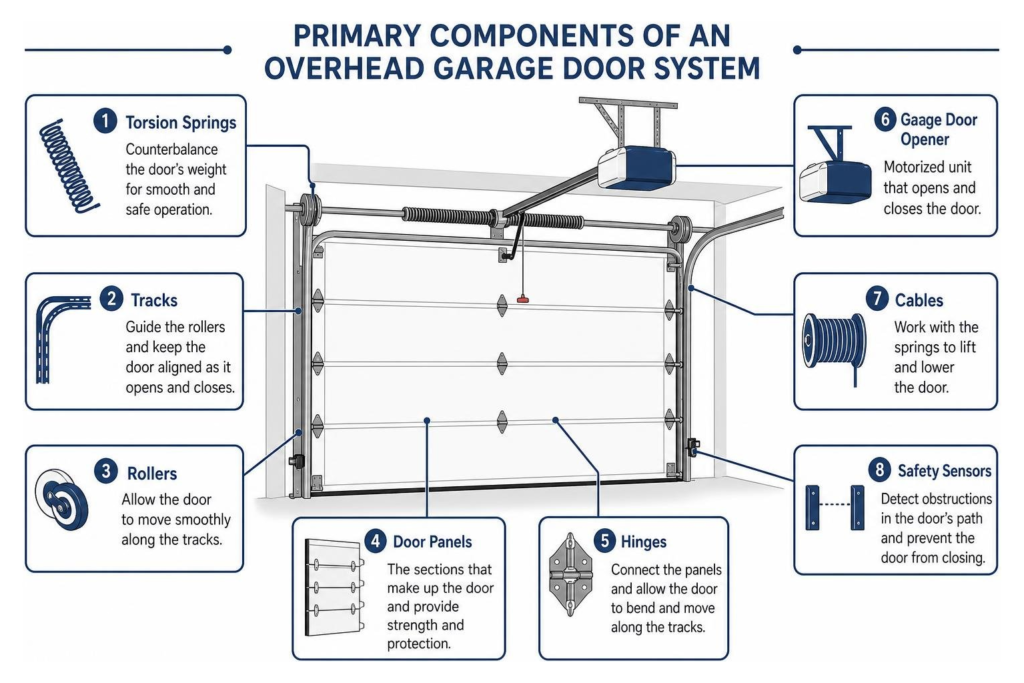
An overhead garage door system, while seemingly simple, is a complex assembly of interconnected parts designed for heavy-duty, repetitive use. Its lifespan, typically ranging from 15 to 30 years, is heavily influenced by factors such as local climate, frequency of use, and diligent maintenance. Mechanical safety and operational reliability are paramount, as component fatigue can lead to unexpected failures. Understanding the primary components of your garage door system is the first step toward proactive care and identifying potential issues.
Even the most robust garage door systems are susceptible to mechanical wear and tear over time. Recognizing the early signs of trouble can save homeowners in Easton, MD, from more extensive and costly repairs down the line. Common indicators of a problem often manifest as unusual noises, inconsistent operation, or visible damage. Ignoring these early warnings can escalate a minor issue into a significant safety hazard.
For instance, if your garage door begins to make grinding, squealing, or scraping sounds, it’s usually a sign that components are not moving smoothly. This could point to issues like worn rollers, inadequate lubrication, or even a misaligned track. A motor malfunction might present as the door struggling to open or close, stopping halfway, or failing to respond to commands from your opener. Sometimes, the issue is as simple as a track obstruction, where debris or a bent section prevents the door from moving freely. A thorough visual inspection and attentive listening can often help diagnose these initial problems before they become critical.
Broken Springs and Cable Wear
Among the most critical components of any garage door system are the springs and lift cables. These elements work under immense tension to counterbalance the door’s significant weight, making it easy for the opener (or a person) to lift. There are generally two types of springs: torsion springs, located horizontally above the door opening, and extension springs, which run parallel to the horizontal tracks.
When a spring breaks, the immediate symptom is often a door that feels incredibly heavy and won’t open, or opens only a few inches before stopping. For torsion springs, you might notice a visible gap in the spring itself. For extension springs, one side of the door might sag. Operating a door with a broken spring is extremely dangerous, as the opener will be forced to lift the entire weight of the door, leading to further damage to the opener and potentially the door itself. More importantly, the sudden release of high tension can cause severe injury if not handled by a professional.
Similarly, lift cables, which connect the bottom of the door to the spring system, are crucial for proper operation. Signs of cable wear include fraying, rust, or visible damage. If a cable snaps, the door will likely become uneven, or one side will drop suddenly. Due to the high tension involved and the specialized tools required for safe spring and cable replacement, these repairs should always be entrusted to certified professionals. Attempting DIY repairs on these components can result in serious injury or further damage to your garage door system.
Sensor Misalignment and Track Obstructions
Modern garage doors are equipped with essential safety features, none more critical than the safety sensors, often referred to as photo-eyes. These small devices, typically mounted a few inches off the ground on either side of the garage door opening, emit an invisible beam. If this beam is interrupted while the door is closing, the door is designed to automatically reverse, preventing it from closing on a person, pet, or object.
Sensor misalignment is a common culprit when a garage door refuses to close or reverses unexpectedly. Even a slight bump or vibration can knock a sensor out of alignment, causing the beam to break. Dirt, dust, spiderwebs, or even direct sunlight shining into one of the sensor lenses can also mimic an obstruction, triggering the auto-reverse safety feature. Homeowners can often resolve this by simply cleaning the sensor lenses and ensuring they are pointed directly at each other, with their indicator lights (usually green or amber) glowing steadily.
Beyond sensors, the tracks along which the garage door rollers travel are vital for smooth operation. Track obstructions, such as accumulated dirt, debris, or small objects, can cause the door to bind, make loud noises, or even come off the tracks entirely. Track warping or bending, often due to impact or age, can also lead to similar issues. If the tracks are visibly bent or damaged, or if the door repeatedly gets stuck, it’s a clear sign that professional attention is needed. A misaligned or obstructed track can place undue stress on the entire system, leading to premature wear of rollers, hinges, and even the opener.
Essential Garage Door Repair and Maintenance Protocols
Proactive maintenance is the cornerstone of extending your garage door’s lifespan and preventing unexpected breakdowns. Just like any other complex mechanical system in your home, regular care can significantly reduce the need for emergency repairs and ensure consistent, safe operation. Establishing a routine lubrication schedule, regularly checking hardware tightness, and inspecting weatherstripping are simple yet effective steps homeowners can take. Furthermore, periodic operational testing allows you to catch minor issues before they escalate.
Preventative Garage Door Repair and Maintenance Checklist
To help you keep your garage door in top condition, we’ve compiled an essential homeowner safety checklist. These tasks are generally safe for DIY, but always exercise caution and consult a professional if you’re unsure.
- Lubricate Moving Parts: At least twice a year, apply a silicone-based lubricant (never WD-40, which can attract dirt) to rollers, hinges, and springs. This reduces friction and wear.
- Hinge Maintenance: Check all hinges for tightness and signs of rust. Tighten any loose bolts with a wrench.
- Roller Inspection: Examine rollers for wear, cracks, or chips. If they appear damaged or are making excessive noise, they may need replacement.
- Visual Audit: Perform a comprehensive visual inspection monthly. Look for frayed cables, worn springs, loose hardware, or damaged panels. Pay attention to anything that looks out of place.
- Balance Test: Disconnect your garage door opener (usually by pulling the emergency release cord). Manually lift the door halfway. If it stays in place without assistance, your springs are properly balanced. If it falls or rises, the springs need adjustment by a professional.
- Weatherstripping Check: Inspect the rubber weather seal along the bottom of your door. If it’s cracked, brittle, or missing, replace it to maintain energy efficiency and keep out pests and moisture.
- Operational Testing: Regularly open and close your garage door, listening for unusual sounds and observing its movement. Does it move smoothly and evenly? Does it reverse properly when an obstruction is detected?
Sensor Calibration and Mechanical Adjustments
While many maintenance tasks can be handled by homeowners, certain adjustments and calibrations require a more nuanced approach. Ensuring your safety sensors are accurately calibrated is paramount. This involves not only cleaning the lenses but also verifying they are perfectly aligned. If the indicator lights on the sensors are flickering or off, it signals a misalignment that needs immediate attention.
Beyond sensors, periodically checking and tightening all nuts and bolts throughout the system can prevent components from coming loose and causing operational failures. This includes hardware on the tracks, hinges, and opener mounting. A detailed cable inspection should also be part of your routine; look for any signs of fraying, kinks, or rust, as compromised cables can snap without warning.
To ensure the auto-reverse mechanism is functioning correctly, place a piece of wood or a cardboard box flat on the floor in the door’s path. When the door attempts to close and touches the object, it should immediately reverse. If it doesn’t, the safety feature is malfunctioning, and professional service is required. Finally, if your garage door fails the balance test mentioned earlier, it indicates that the springs require balance calibration. This is a task that carries significant risk due to the high tension of the springs and should only be performed by experienced technicians. Proper balance is crucial not only for safety but also for the longevity of your garage door opener, as it prevents the opener from overworking.
Repairing Versus Replacing an Aging Garage Door System
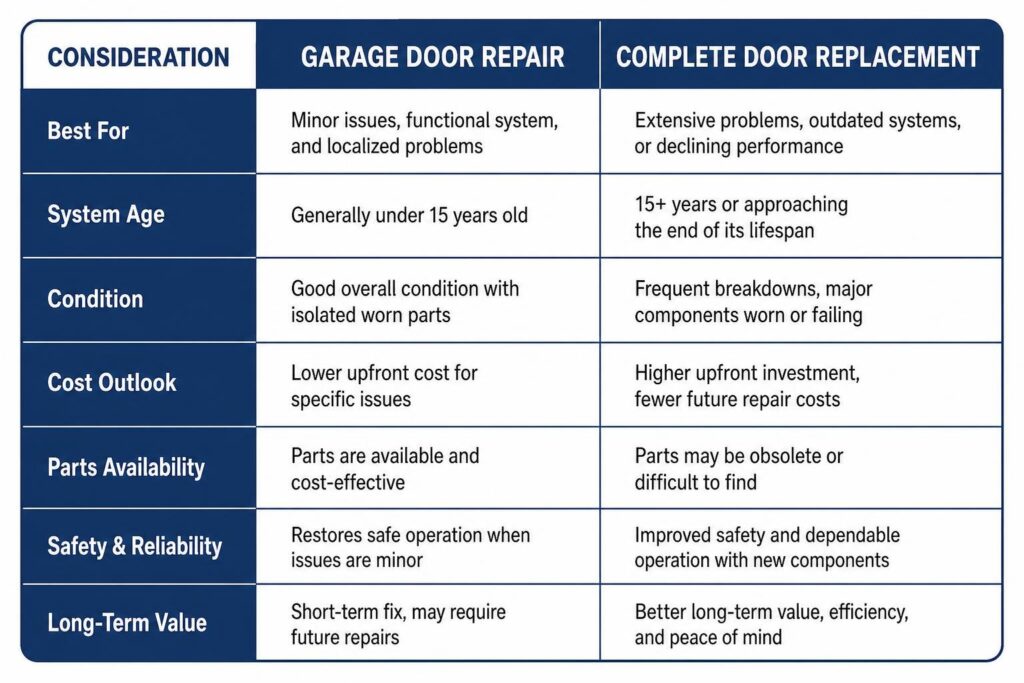
One of the most significant decisions homeowners in Easton, MD, face regarding their garage door is whether to repair an existing system or invest in a complete replacement. This choice often hinges on several factors, including the system’s age, the extent of structural integrity issues, energy efficiency concerns, and the severity of panel damage. While a repair might seem like the most affordable option in the short term, a replacement can offer long-term benefits in terms of safety, functionality, and even property value.
Structural Lifespan and Cost Analysis
Garage doors generally have a robust lifespan, often exceeding 15 years, and sometimes even reaching 30 years with meticulous maintenance. However, as a system approaches the 15-year mark, homeowners should begin to critically assess its condition. If repairs become increasingly frequent, or if the cost of individual repairs starts to accumulate significantly, it might be a clear signal that the system is nearing the end of its economically viable life.
Consider the availability of parts for older models. As garage door technology evolves, finding compatible components for very old systems can become challenging and expensive. If a crucial part is obsolete, a repair might be impossible or require custom fabrication, which drives up costs. A comprehensive cost analysis should compare the cumulative expenses of repeated repairs over a few years against the one-time investment of a new door. Often, the economic viability tips towards replacement when repairs become a recurring event, especially if they involve major components like springs, tracks, or the opener motor. While the upfront cost of a new door is higher, the peace of mind, enhanced safety, and reduced future repair bills often make it the more prudent long-term financial decision.
Modern Upgrades and Insulation Benefits
Choosing to replace an aging garage door offers a wealth of benefits that extend far beyond simply fixing a broken system. Modern garage doors come equipped with advanced security features, including stronger locking mechanisms and rolling code technology for openers, significantly enhancing your home’s protection. Beyond security, a new door can dramatically improve your home’s energy efficiency. Many contemporary models boast excellent thermal insulation, measured by their R-value, which helps regulate the temperature in your garage. This is particularly beneficial in Easton, MD, where humid summers and chilly winters can lead to significant energy loss through an uninsulated or poorly insulated garage door, especially if your garage is attached to your home.
Furthermore, the aesthetic impact of a new garage door is undeniable. It can instantly transform your home’s curb appeal, making it look newer and more inviting. This isn’t just about aesthetics; a garage door replacement is consistently ranked as one of the top home improvement projects for return on investment. According to industry statistics, it can recoup an astounding 194% of its cost upon home sale, making it a smart financial decision for homeowners looking to boost their property value. Smart openers, compatible with home automation systems, offer convenience and control from your smartphone, adding another layer of modern functionality that older doors simply cannot provide.
Evaluating Professional Service and Technical Expertise
When faced with a garage door issue, the temptation to opt for the cheapest fix can be strong. However, for complex or safety-critical repairs, the value of professional service and technical expertise cannot be overstated. Engaging certified technicians ensures that your garage door is repaired correctly, safely, and efficiently. Professionals bring specialized diagnostic tools and an in-depth understanding of various garage door systems, allowing them to identify the root cause of a problem rather than just treating symptoms.
For homeowners in Easton, MD, choosing a local service provider with a reputation for reliable and expert garage door repair is particularly advantageous. Local technicians understand the unique climate considerations of the Eastern Shore, which can impact garage door materials and longevity. They are also typically able to offer faster emergency response times, which is crucial when your garage door is stuck open or poses a safety risk. When evaluating a service, look for companies that prioritize transparency, provide clear explanations of the work needed, and have positive local reviews.
Professional Garage Door Repair and Maintenance Standards
Professional garage door repair goes beyond simply replacing a broken part. It involves adhering to rigorous standards that ensure the long-term safety and functionality of the entire system. A key aspect of this is precise spring calibration and tension adjustment. As discussed, garage door springs operate under extreme tension, and their correct adjustment is vital for the door’s balance and the opener’s longevity. Professionals use specialized tools and techniques to ensure springs are calibrated to the exact weight of your door, preventing premature wear and dangerous malfunctions.
Moreover, a reputable technician will always perform a root-cause diagnosis. Instead of merely replacing a broken component, they will investigate why it failed in the first place. This approach prevents recurring issues and ensures a lasting solution. For example, a broken spring might be a symptom of an unbalanced door, or a malfunctioning opener could be due to a wiring issue rather than a motor failure. Adherence to safety compliance is another hallmark of professional service. Technicians are trained to follow strict safety protocols, minimizing risks during repairs and ensuring that the repaired system meets all safety standards. This comprehensive approach is what truly distinguishes professional service from quick, temporary fixes.
Warranty Protection and Service Guarantees
When investing in garage door repair or replacement, the presence of warranty protection and service guarantees is a critical indicator of value and reliability. These assurances provide peace of mind and protect your investment against unforeseen issues. A reputable service provider will typically offer warranties on both parts and labor. Parts warranties cover the components installed, ensuring that if a new spring or opener fails prematurely due to a manufacturing defect, it will be replaced at no additional cost. Labor coverage, on the other hand, guarantees the quality of the installation or repair work itself. If an issue arises shortly after service due to faulty workmanship, the technician will return to rectify it.
For new garage door installations, comprehensive installation guarantees are particularly valuable. These ensure that the door is installed correctly according to manufacturer specifications and industry best practices. Such guarantees reflect a company’s confidence in their work and their commitment to customer satisfaction. When comparing service options in Easton, MD, always inquire about the specifics of their warranties and guarantees. A strong warranty package transforms a one-time repair into a long-term assurance, significantly impacting the overall value and affordability of the service by reducing potential future expenses and providing a safety net for your investment.
Frequently Asked Questions About Overhead Door Care
Homeowners frequently have questions about maintaining their garage doors, ensuring safety, and understanding when professional help is truly necessary. Addressing these common inquiries can empower you to make informed decisions about your overhead door care.
How often should a residential garage door undergo professional servicing?
For optimal performance and longevity, we generally recommend that a residential garage door undergo professional servicing at least once a year. This annual tune-up allows technicians to identify and address minor issues before they escalate into major, costly repairs. In areas like Easton, MD, where humid summers and chilly winters can put additional stress on garage door components, a biannual inspection might be even more beneficial. Scheduling seasonal maintenance, perhaps in the spring and fall, can help prepare your door for extreme weather conditions and prevent wear caused by temperature fluctuations and moisture. Regular professional checks are crucial for wear prevention, ensuring all components are properly lubricated, adjusted, and functioning safely.
What are the main safety hazards associated with DIY spring repairs?
Attempting DIY spring repairs is one of the most dangerous tasks a homeowner can undertake with a garage door. The main safety hazards stem from the extreme tension stored within the springs. Torsion springs, in particular, are under immense pressure, designed to counterbalance hundreds of pounds of door weight. If handled improperly, this tension can be released suddenly and violently, leading to severe injuries such as broken bones, lacerations, loss of fingers, or even death. Specialized tools, specific training, and a deep understanding of mechanical recoil are required to safely manipulate these components. Without the proper expertise, the risk of the spring snapping back or unwinding uncontrollably is incredibly high. For this reason, spring repairs should always be left to certified garage door technicians.
When is it necessary to replace a damaged garage door panel rather than repairing it?
The decision to repair or replace a damaged garage door panel depends on several factors. If only one or two panels are damaged, and the damage is minor (e.g., a small dent or crack that doesn’t compromise the panel’s structural integrity), a repair or individual panel replacement might be feasible. However, if the damage is extensive, affects multiple panels, or compromises the door’s structural integrity, replacement of the entire door is often the more sensible option.
Other considerations include the availability of matching panels for your specific door model and color. Older or discontinued models might make finding an exact match difficult or impossible, leading to a mismatched appearance. If the damage affects the track alignment or the door’s overall balance, replacing the entire door might be necessary to restore proper function and safety. If the cost of repairing or replacing multiple individual panels approaches the cost of a new door, or if the existing door is old and inefficient, a full replacement often provides better long-term value, improved aesthetics, and enhanced energy efficiency.
Conclusion
Maintaining your garage door system is a vital aspect of homeownership, contributing significantly to both your property’s safety and its overall functionality. By understanding common malfunctions, implementing proactive maintenance protocols, and knowing when to seek professional assistance, homeowners in Easton, MD, can ensure their garage doors operate smoothly and reliably for years to come. While the allure of the cheapest repair can be strong, prioritizing value, expertise, and safety through certified technicians and quality components will always lead to greater long-term reliability and peace of mind. Regular inspections, timely repairs, and informed decisions about repair versus replacement are key to safeguarding your investment and ensuring the operational safety and longevity of your garage door system.


