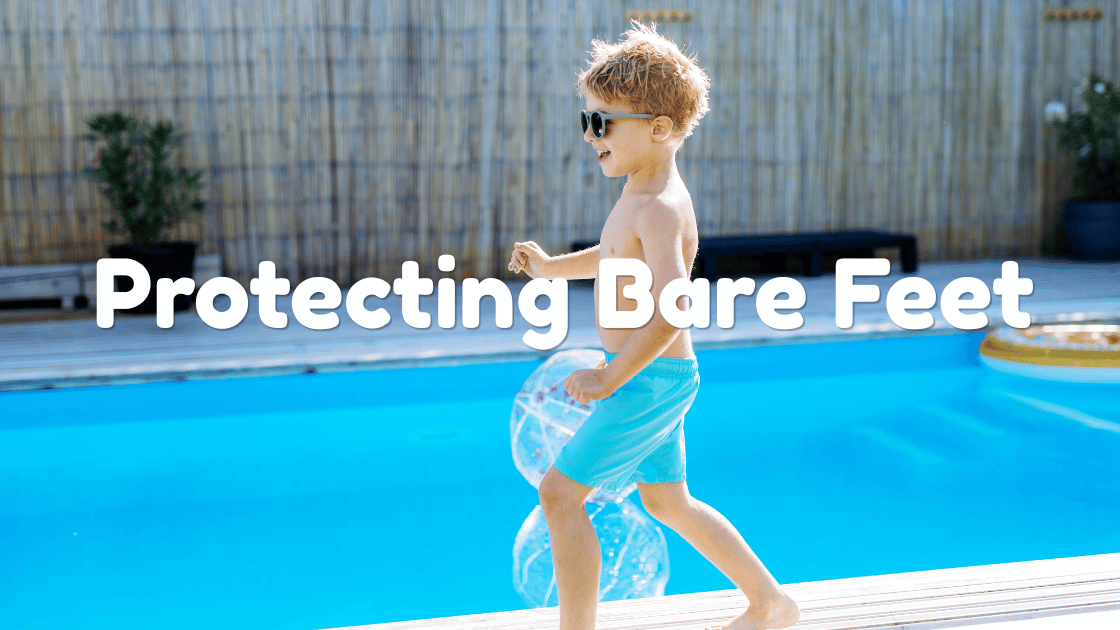
Every parent with a backyard pool knows the sound of small wet feet slapping across the deck, usually followed by someone yelling “Walk!” from a lounge chair. Kids spend a surprising share of pool time out of the water, running to the steps, sprawling on towels and lining up for cannonballs. That makes the surface around the pool almost as important as the pool itself. If you’re building a new deck or replacing a tired one, a few choices about texture, color and layout can make summer afternoons calmer for everyone.
Why the deck takes more of the action than the water
Watch a group of kids at the pool for an hour and you’ll notice how little of it is spent swimming in a straight line. They climb out, grab a snack, chase a ball that bounced away, sit on the edge to dangle their feet and jump back in. All of that happens on the deck, often barefoot and dripping.
Three things tend to decide whether that goes smoothly. Grip matters most, because wet surfaces and running feet are a predictable mix. Heat comes next, since concrete in direct afternoon sun can get uncomfortable for bare feet in a hurry. Cleanup is the third. Sunscreen, popsicle drips and leaves all end up on the deck, and some finishes hide that mess far better than others.
Concrete finishes compared for grip, heat and comfort
Concrete is a popular deck material because it can be shaped around almost any pool and finished in several ways. Most of those finishes, from a simple broom texture to a stamped pattern, are applied while the concrete is still workable. So the finish is worth settling early, ideally before a concrete pool deck installation is on the calendar.
- Broom finish is the plain, lightly ridged surface you see at many public pools. It offers good grip and usually costs the least. It looks fairly basic, though, and the texture can feel a bit rough on toddlers’ knees.
- Stamped concrete mimics stone, slate or brick, which looks lovely in photos. The sealer that protects it can make it slippery when wet unless an anti-slip additive is mixed in, so ask about that specifically.
- Exposed aggregate shows small pebbles at the surface and grips well even when soaked. Some kids find it scratchy to sit or crawl on, so it suits families with older children better.
- Textured cool-deck coatings go on top of the slab and are designed to stay cooler underfoot. The finish is softer on feet, but it may need touching up or recoating every several years.
Color plays a role too. Lighter shades generally stay cooler in full sun than dark gray or charcoal, which is worth remembering if your pool faces south or west.
Layout details that make watching the kids easier
Surface is only half of it. Where things go on the deck shapes how relaxed the grown-up on duty can actually be. Before anything is poured, sketch the deck with a few zones in mind.
Start with a shaded seat that has a clear view of the whole pool, including the deep end and the steps. Then add a dry corner for towels, snacks and phones, set back far enough that splashes don’t reach it. Leave enough walking room along the edges for two kids to pass each other without someone getting nudged toward the water. And think about drainage, since puddles that linger near the steps tend to become the slippery spot everyone remembers.
It’s reasonable to ask whoever builds the deck, whether that’s a small local crew or a company like Allied Outdoor Solutions, to mark these zones on the plan. Seeing them on paper makes it easier to catch a lounge chair that blocks your view of the slide or a snack table placed right in the splash zone.
Test the surface barefoot before you decide
Samples on a showroom table don’t tell you much about how a deck feels on a 90-degree afternoon. If you can, visit a finished deck with the finish you’re considering, take your shoes off, pour a little water on it and walk across. Bring the kids along, too. They’ll tell you within about ten seconds whether it’s too hot, too rough or too slick, and their verdict is the one that has to hold up all summer.