
Navigating life after a breast cancer diagnosis changes the way you look at everything—especially what goes on your plate. Once treatment ends, the natural next question for so many of us is: *What can I actively do every single day to support my body, reduce inflammation, and help keep cancer from returning?*
In my search for evidence-based dietary strategies, one compound kept coming up again and again in oncology and nutritional research: sulforaphane.
For a while, I did what many of us do when looking for a health boost—I bought high-end sulforaphane supplements. But those little bottles add up quickly, and shelf-stable pills don’t always deliver the bioavailability you hope for.
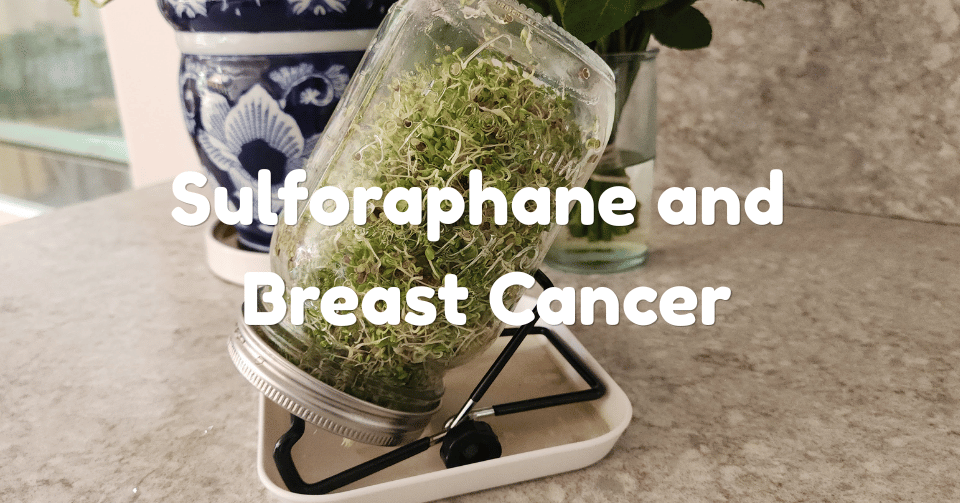
Then came an unexpected shift right on our kitchen counter. My husband decided he wanted to grow his own broccoli sprouts simply because he loves the crunch and flavor on a sandwich. Truthfully, I’d never been a huge fan of sprouts. But after sampling a pinch of his homegrown harvest, I was genuinely surprised by how fresh, mild, and nutty they tasted compared to the sad, plastic-clamshell versions sitting under grocery store fluorescent lights.
That first bite changed my mind. Eating a half-cup to a full cup of fresh, vibrant sprouts daily wasn’t just doable—it was delicious, dirt-cheap, and impossible to beat for freshness.
The Science: Why Sulforaphane Matters for Breast Cancer Survivors
Sulforaphane isn’t just another trendy buzzword; it is one of the most rigorously studied phytochemicals in nutritional oncology.
Here is what the clinical and laboratory research shows:
Targeting Cancer Stem Cells:
Standard cancer therapies target rapidly dividing cells, but cancer stem cells can sometimes linger quietly. Landmark research published in *Clinical Cancer Research* demonstrated that sulforaphane targets and inhibits breast cancer stem cells, helping suppress tumor sphere formation. ([Read the study abstract at PubMed](https://pubmed.ncbi.
Supporting Healthy Estrogen Metabolism:
Sulforaphane activates the **Nrf2 pathway**—the master switch for cellular defense—and boosts Phase II detoxification enzymes in the liver. Research highlights its potential role in balancing estrogen metabolism and reducing oxidative DNA damage. ([Explore the review at PubMed Central](https://www.ncbi.nlm.
Epigenetic Regulation:
Studies show sulforaphane acts as a natural histone deacetylase (HDAC) inhibitor, an epigenetic mechanism that helps restore normal function to protective tumor-suppressor genes. ([Read more on HDAC inhibition and cancer prevention](https://pubmed.
Why Broccoli Sprouts Reign Supreme
Broccoli sprouts (around 3 to 5 days old) contain **10 to 100 times higher concentrations** of *glucoraphanin* (the precursor to sulforaphane) than mature heads of broccoli.
To create active sulforaphane, glucoraphanin must meet an enzyme called **myrosinase**. This reaction happens when the plant cells are crushed or chewed. Because raw, live sprouts are packed with active myrosinase, simply tossing them onto your meals gives you a potent, fully bioavailable dose straight from the source.
How to Grow Broccoli Sprouts at Home (The Easy Sprout Jar Method)
Growing sprouts doesn’t require gardening skills, soil, or messy cleanup. All you need is a wide-mouth glass sprouting jar fitted with a fine mesh screen lid and an angled drip stand or tray.
What You Need:
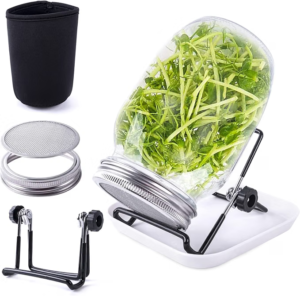
- 1 wide-mouth quart-sized glass mason jar
- 1 stainless steel sprouting mesh lid
- 1 angled drainage stand or drip tray
- 2 tablespoons of organic, pathogen-tested sprouting seeds
- The sprouting kits are very inexpensive on Amazon – here is an example. (affiliate)
You may also find organic broccoli seeds on Amazon – I use these and they grow so fast! (affiliate)
Step-by-Step Instructions:
1. **The Initial Soak (Day 1):**
Measure 2 tablespoons of organic broccoli seeds into your jar. Cover them with 2 to 3 cups of cool, filtered water. Fasten the mesh lid and let the seeds soak undisturbed on the counter for 8 to 12 hours (overnight works best).
2. **Rinse and Invert (Day 2):**
Pour out the soaking water right through the mesh lid. Fill the jar with fresh, cool water, gently swirl, and drain thoroughly. Place the jar upside-down at roughly a 45-degree angle on your drip stand.
*Tip:* Good drainage and airflow are essential to keep your sprouts sweet, fresh, and mold-free.
3. **Rinse Twice Daily (Days 2 to 5):**
Morning and evening, give the jar a quick rinse with cool water, drain well, and return it to the stand. Keep the jar out of harsh, direct sunlight during this stage—ambient kitchen light is ideal.
4. **Greening Up & Final Harvest (Day 5 or 6):**
By day 5, tiny green leaves will fill the jar. Move the jar into indirect natural light for a few hours so the leaves produce chlorophyll and turn a vibrant green.
5. **Dry & Store:**
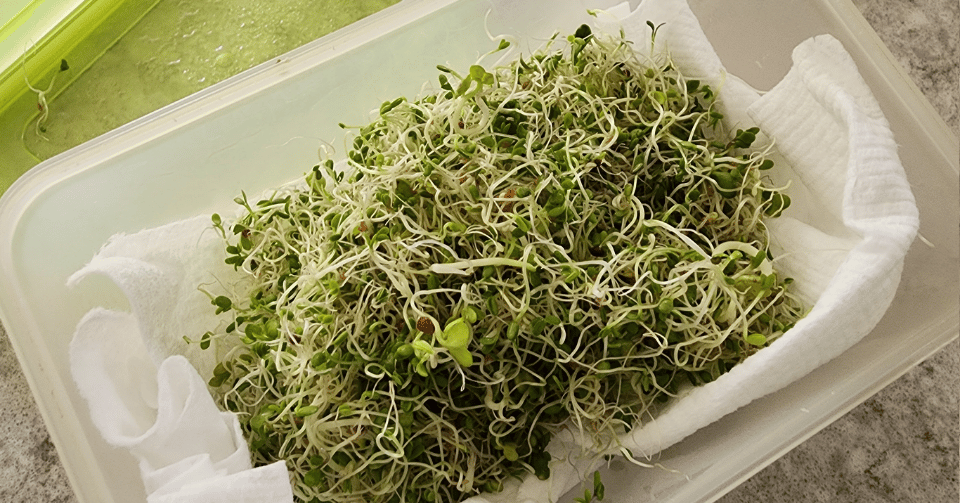
Once ready, give the sprouts one final rinse and drain thoroughly. Empty them onto clean paper towels or a lint-free kitchen towel and gently pat them dry for 15 to 20 minutes (dryer sprouts last much longer). Store them in an airtight container lined with a dry paper towel in the refrigerator for up to 5 to 7 days.
Other Great Sources of Sulforaphane
While broccoli sprouts are the undisputed champion by concentration, sulforaphane and its glucosinolate precursors are present throughout the entire cruciferous vegetable family.
To keep your diet varied and colorful, consider adding these to your rotation:
Mature Broccoli – Lightly steam for no more than 3 to 4 minutes to preserve the heat-sensitive myrosinase enzyme. |
Brussels Sprouts – Shred raw into salads or slaw, or roast gently. |
Purple & Green Cabbage – Great fermented as raw sauerkraut, which adds gut-friendly probiotics alongside glucosinolates. |
Radishes & Daikon – Contain high levels of active myrosinase; great sliced thin over cooked crucifers. |
Arugula & Watercress – Peppery greens loaded with related isothiocyanates; perfect as an everyday salad base. |
Mustard Greens & Mustard Seed – A pinch of raw ground mustard seed powder sprinkled over cooked broccoli can restore the enzyme needed to generate sulforaphane. |
Everyday Nourishment
Healing and prevention don’t always come in expensive bottles or complicated routines. Taking two minutes in the morning and evening to rinse a jar on the counter has become a comforting, empowering ritual.
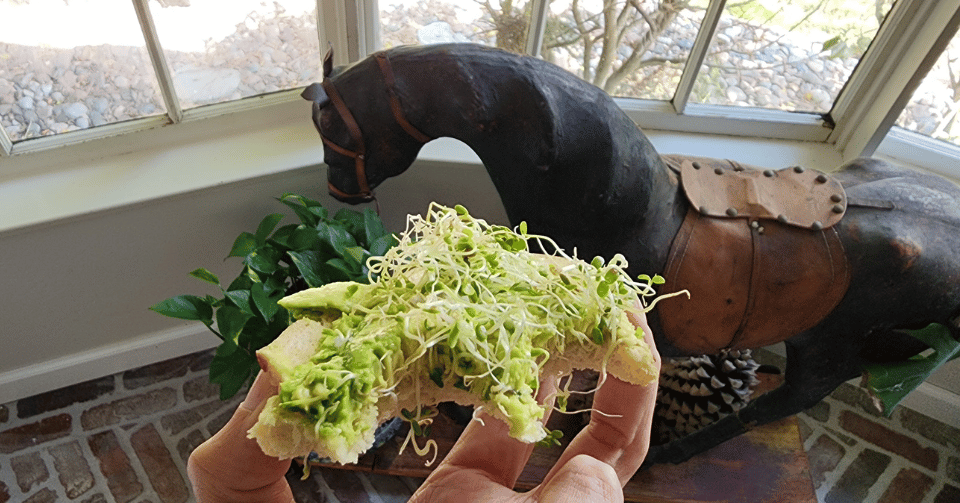
Whether piled onto avocado toast, rolled into a grain bowl, or tossed into a lunchtime salad, having a continuous supply of fresh greens right at hand is a simple, tangible way to nourish my body for the road ahead.
*Disclaimer: I am sharing my personal experience and research as a survivor. This post is for informational and educational purposes only and is not intended as medical advice. Always discuss dietary changes or supplements with your oncology team.*


