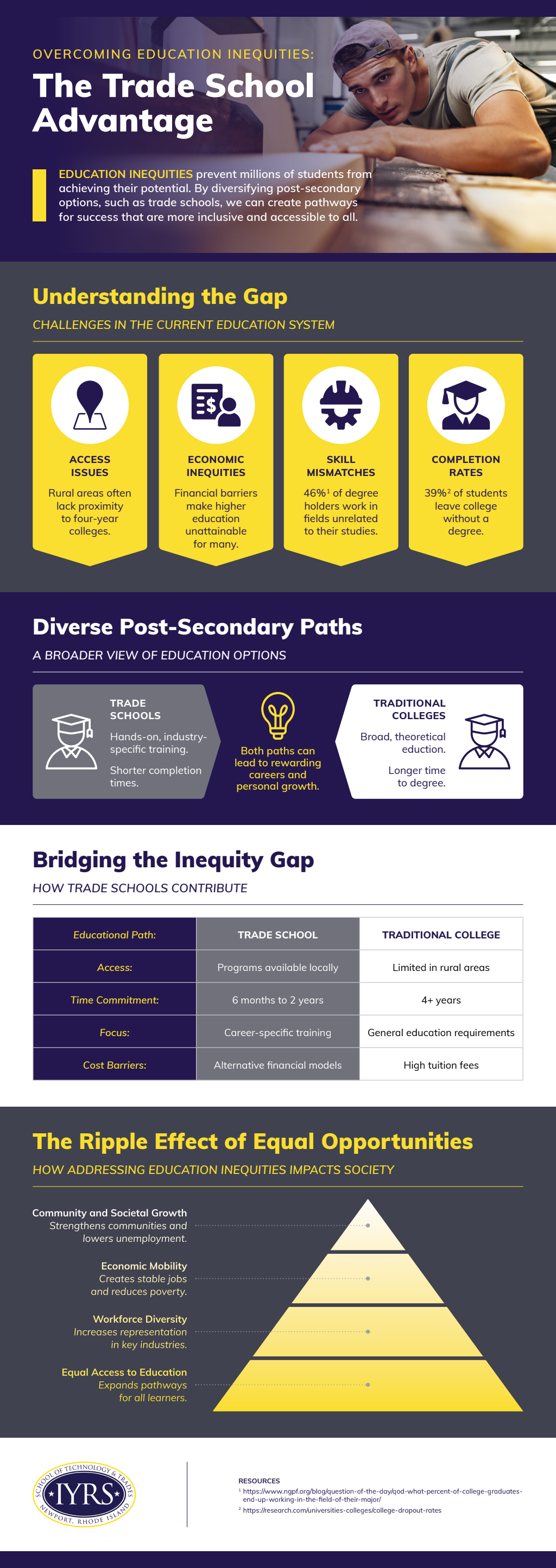
Access to education is not always equal, and many families face financial, geographic, or academic barriers that limit traditional college options. Rising tuition costs and student debt concerns have also changed how parents think about post-high school plans. Trade education offers an alternative pathway that focuses on practical skills, faster entry into the workforce, and more predictable costs. For many families, this approach creates opportunities that might otherwise feel out of reach.
Expanding Access to Career Training
Trade programs provide structured learning environments that emphasize hands-on training. Students can pursue careers in fields such as healthcare support, construction, automotive repair, and technology services without committing to a four-year degree. These programs often have shorter completion timelines, which allows students to begin earning sooner.
Lower tuition costs can reduce financial strain on families. Many programs also offer flexible scheduling, which helps students balance work and education. This accessibility makes skill-based training a practical option for individuals who may not thrive in traditional academic settings.
Closing Skill Gaps in Local Communities
Workforce shortages in skilled trades continue to affect many communities. Electricians, plumbers, technicians, and healthcare support workers remain in high demand across the country. Trade schools helps fill these gaps by preparing students with job-ready skills that align with local employment needs.
Local partnerships between training programs and employers can create direct hiring pipelines. Apprenticeships and internships provide real-world experience while building confidence and professional connections. These opportunities allow students to transition into stable employment more smoothly.
Supporting Confidence and Independence
Education is not only about career outcomes but also about personal development. Trade programs often focus on measurable progress, which can help students build confidence as they master new skills. Clear benchmarks and hands-on learning create a sense of achievement that supports motivation.
Parents may notice that students who struggled in traditional classrooms thrive in environments that emphasize practical application. Learning through doing can reinforce problem-solving, teamwork, and responsibility.
Stronger confidence often leads to greater independence. Students who gain employable skills early are better positioned to manage finances, contribute to their households, and plan for future goals.
Trade education provides a meaningful option for families seeking alternatives to traditional college pathways. Accessible training, strong job alignment, and skill-focused learning help address opportunity gaps. For many students, this approach offers a direct and achievable route to stability, growth, and long-term success. Look over the infographic below for more information.