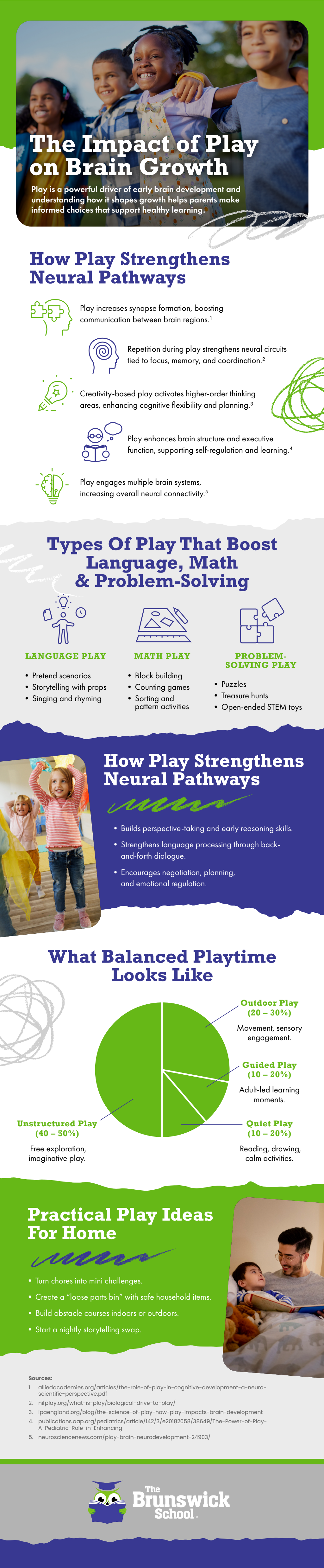
Play is more than entertainment for children. It is a critical part of brain development that supports learning, problem-solving, and emotional growth. Through play, children explore their environment, test ideas, and build connections that influence how they think and interact with others. Simple activities such as building, pretending, or moving around all contribute to important developmental milestones.
Building Cognitive Skills Through Play
Play encourages children to think, experiment, and adapt. Activities like puzzles, blocks, and imaginative games require planning and decision-making. These experiences help strengthen memory, attention, and reasoning skills.
Creative play also supports language development. When children engage in storytelling or role play, they practice forming sentences and expressing ideas. This type of interaction builds communication skills that are essential for school readiness.
Repetition during play reinforces learning. Trying the same activity in different ways allows children to improve their understanding and confidence.
Supporting Emotional and Social Development
Play gives children a safe space to express emotions and build relationships. Group activities encourage sharing, cooperation, and conflict resolution. These experiences teach children how to communicate needs and respectfully respond to others.
Unstructured playtime is especially valuable. Without strict rules, children learn to manage their own choices and emotions. This independence supports resilience and adaptability.
Programs such as daycare summer programs often include group play activities that help children interact with peers while developing social awareness in a supportive environment.
Encouraging Physical Growth and Coordination
Movement-based play supports physical development and brain function. Activities such as running, climbing, and balancing improve coordination and strengthen muscles. These movements also support brain connections related to motor skills and spatial awareness.
Outdoor play provides additional benefits. Exposure to different environments encourages curiosity and exploration while supporting overall health. Physical activity also helps regulate energy levels and improves focus during quieter learning periods.
Play shapes how children grow, learn, and connect with the world around them. Cognitive, social, and physical development all benefit from regular opportunities to explore and interact through play. Encouraging a variety of play experiences helps children build a strong foundation for future learning and everyday life. Look over the infographic below for more information.