Household chemicals help keep homes clean, pest-free, and functional, but they also carry risks if stored improperly. For families with children, safe storage is not just about organization. It is about prevention. A clear approach to chemical storage reduces the chance of spills, accidental exposure, and mix-ups that can cause injury or illness. With a few practical habits, families can create a safer home environment without adding stress.
Know What Counts as a Household Chemical
Household chemicals include more than cleaning sprays. Laundry detergents, dishwasher pods, drain cleaners, pesticides, automotive fluids, and pool supplies all fall into this category. Even products labeled as natural can cause harm if ingested or misused.
Reading labels helps identify hazards and storage requirements. Products often include guidance on temperature limits, ventilation needs, and child safety considerations.
Choose the Right Storage Location
Location matters more than many people realize. Chemicals should be stored in cool, dry areas away from food, medications, and pet supplies. High cabinets with child-resistant latches offer better protection than under-sink storage, which is easy for children to access.
Garages and basements work for some products, but extreme temperatures can cause containers to leak or degrade. Shelving should be sturdy, and products should never be stored above eye level where spills could fall onto someone.
Keep Products in Original Containers
Original containers provide critical information, including usage instructions and emergency guidance. Transferring chemicals into unmarked bottles increases the risk of accidental misuse.
Manufacturers design containers to resist leaks and child access. Many work closely with a chemical packaging company to ensure containers meet safety and durability standards for household use.
Separate and Secure
Certain chemicals should never be stored together. Bleach and ammonia, for example, can create dangerous fumes if mixed. Keeping products grouped by type reduces the risk of accidental combination.
Locking storage areas adds another layer of protection. Even older children benefit from clear boundaries around hazardous products.
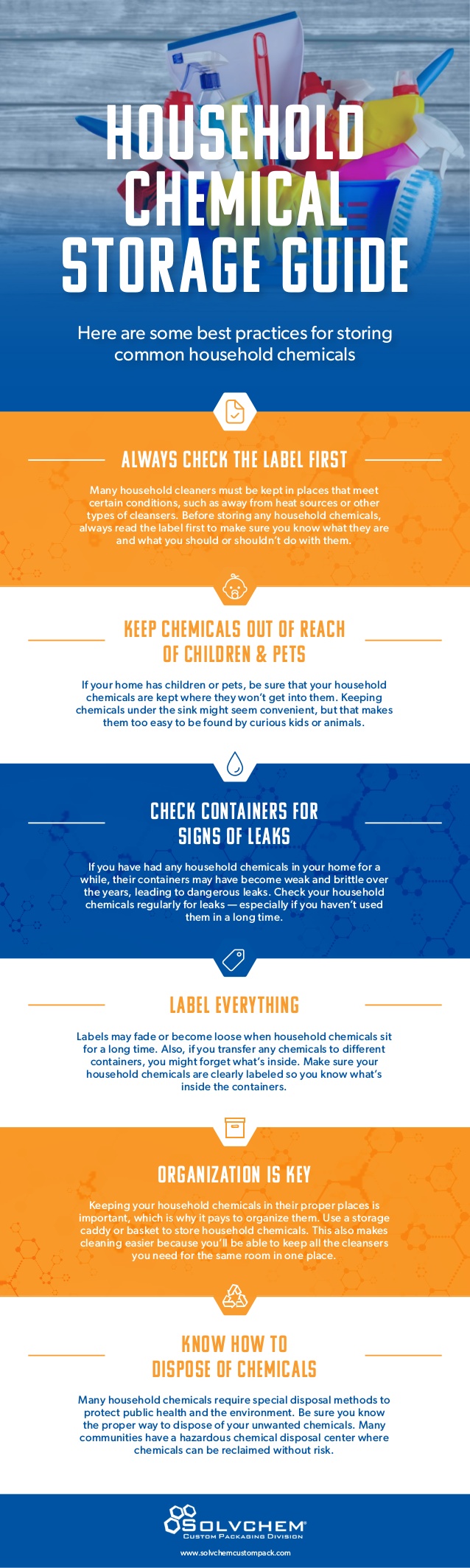
Safe chemical storage is an ongoing habit, not a one-time task. With thoughtful placement, clear labeling, and routine checks, families can reduce risks and create a home that supports both safety and peace of mind. To learn more, check out the infographic below.